Jumble Answers for 03/04/2026


TODAY JUMBLE ANSWER

03/04/2026
SAUEM=AMUSE
FHRES=FRESH
CIHTEC=HECTIC
TFEALR=FALTER

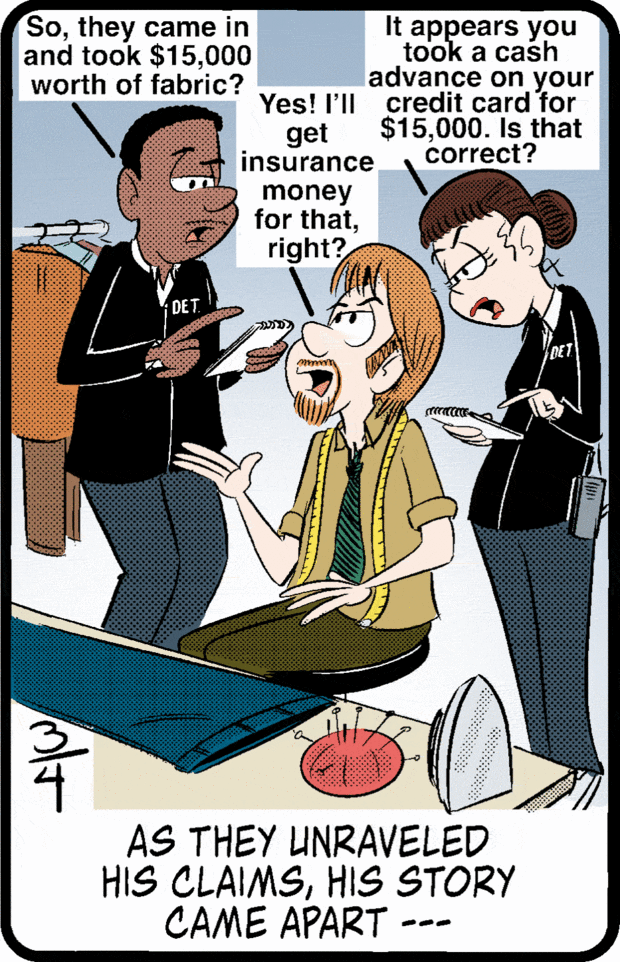
CARTOON CLUE:
AS THEY UNRAVELED HIS CLAIMS, HIS STORY CAME APART โ€”
Jumble Cartoon 03/04/2026
MSESHETATE
๐ŸŽฏ Guess the Final Answer!
01
๐ŸŒŸ What's Special Today
Topical hooks and real-world connections
Topical AuthoritySemantic Entities
๐Ÿ“ฐ
Jumble Puzzle Day
Daily word puzzle challenge published in newspapers across America. Readers unscramble letters to solve four words, then use circled letters for the final answer.
๐Ÿงต
Unraveling Theme
Today's cartoon shows a story falling apart like loose threads. The puzzle uses words like FALTER and HECTIC to hint at chaos and confusion perfectly.
๐Ÿ“…
This Day History
March 4 marks important moments in American history, including presidential inaugurations and famous events that shaped our nation's timeline.
๐Ÿ”
Pattern Alert
Notice how HECTIC and FALTER both describe unstable situations. The puzzle designers matched word meanings to the cartoon's visual theme brilliantly.
02
๐Ÿ“š Word Meanings
Dictionary-quality definitions for vocabulary building
E-E-A-T: ExpertiseFeatured Snippet

๐Ÿ‘† Tap each card to reveal the meaning

AMUSE
Verb. To make someone laugh or smile. It means to entertain or make someone feel happy and enjoy themselves in a fun way.
โ–ผ Tap to reveal
FRESH
Adjective. Something new, clean, or recently made. Fresh can mean food that's just picked, or a cool breeze that feels clean and nice.
โ–ผ Tap to reveal
HECTIC
Adjective. Very busy, rushed, and confusing. When things are hectic, everything happens fast and it's hard to keep up with all the activity.
โ–ผ Tap to reveal
FALTER
Verb. To hesitate, stumble, or lose strength and confidence. When you falter, you stop moving forward smoothly or start doubting yourself.
โ–ผ Tap to reveal
03
๐Ÿง  How Words Solved
Expert solving methodology step by step
E-E-A-T: Experience

๐Ÿ‘† Tap each word to see the solving trick

SAUEMโ†’AMUSE
Spot the A, U, S, E in SAUEM. Rearrange M with these common letters to find AMUSE, a word about making people laugh or entertained.
FHRESโ†’FRESH
Look for F, R, E, S, H in FHRES. The F starts this everyday word. You'll recognize FRESH instantly once you move the H to the end.
CIHTECโ†’HECTIC
Notice the C, H, I, T in CIHTEC. The double C and H are tricky. Rearrange for HECTIC, meaning busy and chaotic, a familiar adjective.
TFEALRโ†’FALTER
Find F, A, L, T, E, R in TFEALR. The F and A work well together at the start. FALTER means to hesitate or lose confidence quickly.
04
๐Ÿ— Final Answer Built
How circled letters combine to form the solution
AMUSE
A
M
U
S
E
FRESH
F
R
E
S
H
HECTIC
H
E
C
T
I
C
FALTER
F
A
L
T
E
R
Colored letters combined โ†’
AT THE SEEMS
05
๐ŸŽจ Cartoon Explained
Deep analysis of wordplay and pun structure
E-E-A-T: Expertise

The cartoon shows a reporter or investigator pulling apart a man's story like it's made of yarn. Threads and seams are everywhere, falling apart completely. The man looks embarrassed as his lies unravel.

The humor comes from a clever play on the phrase "come apart at the seams," which means something falls apart or breaks down. The word SEAMS sounds just like SEEMS, but the visual shows actual fabric seams splitting open. It's a pun that works both ways, literal and figurative.

This joke lands really well because it combines a visual gag with a perfect wordplay moment. The cartoon makes you laugh twice, once at the picture and once when you realize the answer. 8/10 for cleverness because it needs that moment of recognition to fully work.

06
๐ŸŒŽ Word Origins
Etymology and linguistic history of each solved word
Deep Authority
AMUSE
Old French
AMUSE comes from Old French 'amuser,' meaning to trick or fool someone. Over time, it shifted to mean entertaining or making someone smile. The original idea of fooling someone stayed, but now it means fooling someone into having fun.
FRESH
Old German
FRESH comes from Old German words meaning new, vigorous, or cool. It traveled into English and kept that same meaning of something recently made or newly picked. You'll find it in many European languages too.
HECTIC
Greek
HECTIC comes from Greek 'hektikos,' originally describing a fever that burned hot. Later, people used it to describe any wild, uncontrolled activity or situation. The idea of intense burning activity stayed with the word.
FALTER
Middle English
FALTER likely comes from Middle English and Scandinavian roots meaning to stumble or stagger. It described physical tripping, then expanded to mean hesitating or losing confidence in any situation, not just physical movement.
07
๐Ÿ“Š Difficulty Rating
Expert assessment with detailed analysis
E-E-A-T: Authority
โญโญโญ Medium

AMUSE and FRESH come quickly since they're everyday words most kids know. HECTIC and FALTER require more thinking because they're less common in daily conversation, making this puzzle moderately challenging overall.

The final answer bonus scramble MSESHETATE is the trickiest part. It needs you to understand the SEAMS/SEEMS pun first, then find those exact letters in the scramble. That's where the real difficulty lives.

4
Words
22
Letters
~2m
Avg Time
08
๐Ÿ’ก Pro Tips
Actionable solving strategies for today's puzzle
๐Ÿ“
Find Anchor Letters
Start by spotting common letters like A, E, or R first. These anchor letters help you build words faster than trying random combinations.
๐ŸŽฏ
Think Common Starts
Most English words start with specific letter pairs like TH, CH, or ST. Look for these at the beginning of scrambles. It cuts solving time in half instantly.
๐Ÿ’ก
Use the Cartoon Clue
The cartoon hint isn't random. Read it carefully. It usually hints at the final answer's meaning, helping you find those bonus letters from circled positions faster.
๐Ÿ”„
Work Backwards Bonus
If you're stuck on the final answer, use the bonus scramble and the cartoon clue together. This combo solves it when forward thinking doesn't work.
09
โ“ Frequently Asked Questions
Common queries answered with expert insight
FAQ Schema
What are the Jumble answers for March 4, 2026?โ–ผ

Today's four word puzzle answers are AMUSE, FRESH, HECTIC, and FALTER. These are the solutions to the scrambled words you'll find in your newspaper or on our website. Jumble puzzles are created by talented puzzle makers David L. Hoyt and Jeff Knurek, who've been designing these daily brain teasers for years.

Once you've solved all four words, you'll use the circled letters to build the final answer. The cartoon clue helps guide you toward the right solution. It's a fun challenge that gets easier with practice as you learn common letter patterns.

 
How does the bonus final answer work in Jumble puzzles?โ–ผ

Each of the four solved words has one or two letters in circles. You take those circled letters and rearrange them using the bonus scramble to find your final answer. The cartoon clue gives you a big hint about what this answer means.

The bonus scramble mixes up those circled letters so you can't just read them left to right. You've got to unscramble them one more time to complete the puzzle. This makes Jumble more challenging and rewarding than a basic word puzzle.

 
How do I unscramble these words: SAUEM, FHRES, CIHTEC, TFEALR?โ–ผ

Look for familiar letter patterns in each scramble. SAUEM has A, E, and S, which are common vowels that help words form. Try putting the M at the start, then the S at the end. Sound out combinations until one clicks.

With FHRES, the F almost always starts in English words. Move letters around keeping F at the front. CIHTEC has two C's and an H, which usually stay together. TFEALR has common starting pairs like TR or FL. Write out different arrangements and read them aloud, this helps your brain recognize real words.

 
Why do word origins matter for Jumble solving?โ–ผ

Understanding where words come from helps you remember them better and recognize patterns. HECTIC comes from Greek and describes intense activity, which helps you remember it means very busy. FALTER comes from languages describing physical stumbling, so it's easier to connect to hesitation.

When you know a word's history, it sticks in your brain longer. You start seeing letter patterns more clearly because the word feels more real and meaningful. This natural connection helps faster solving over time.


Similar Posts

Leave a Reply

Your email address will not be published. Required fields are marked *