Jumble Answers for 03/03/2026
TODAY JUMBLE ANSWER

👆 Tap each card to reveal the meaning
👆 Tap each word to see the solving trick
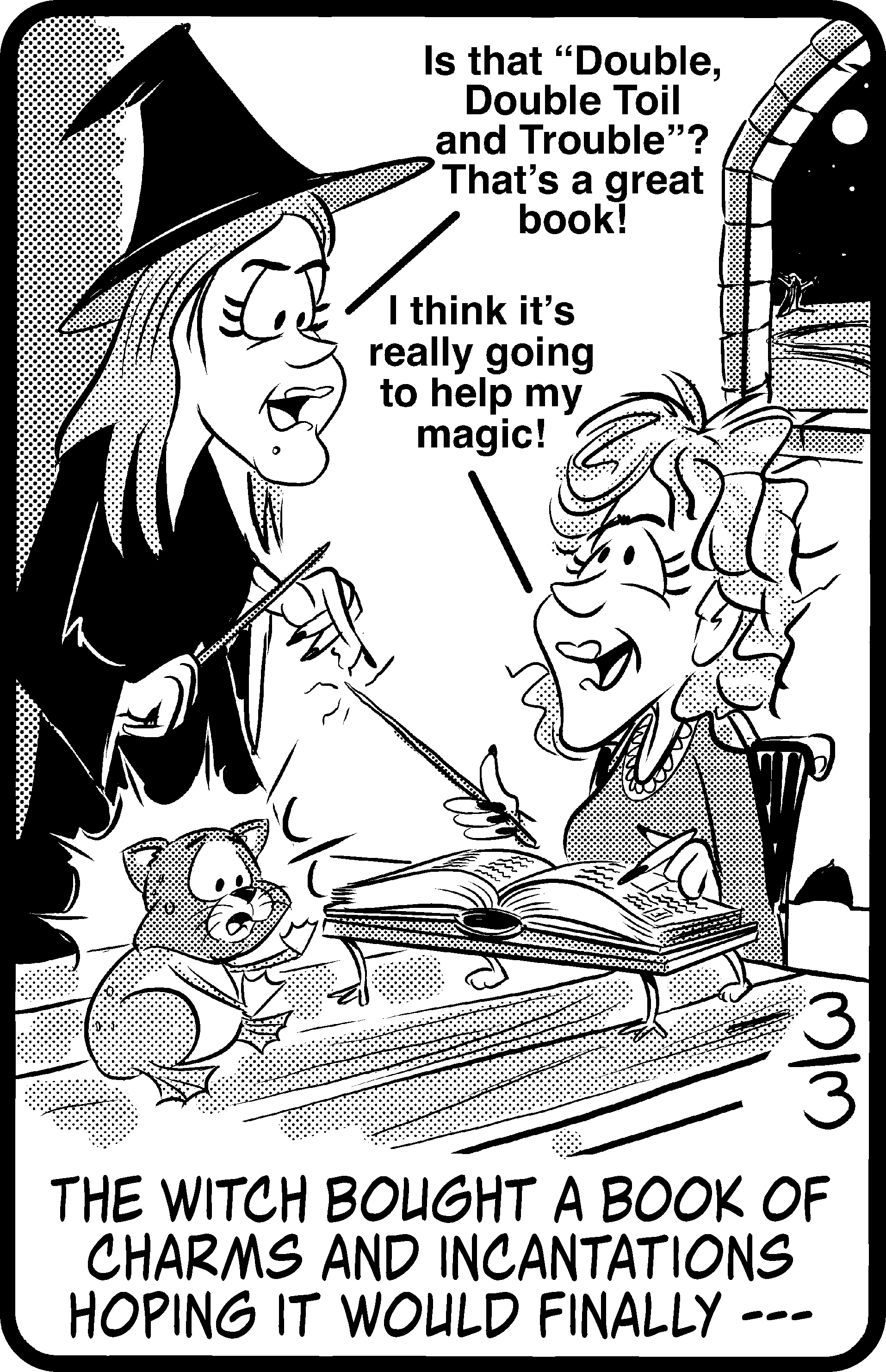
A witch stands in a dusty shop holding a big book titled 'Book of Charms.' Her eyes sparkle with hope. She's dreaming that this magical book will finally make her spells work perfectly instead of going hilariously wrong.
The humor comes from a clever pun. The witch wants her magic to work, so she needs a book about SPELLS. But the answer about what she wants is a SPELL that brings SUCCESS, which sounds like the book title itself. It's a play on words that makes you groan and smile at the same time.
This joke lands because we all know how witches need spells to work in storybooks. The double meaning of "spell" (magic words and the ability to spell correctly) makes it funny. It's a solid 8/10 for cleverness and perfect for a puzzle lover.
CYCLE and GUESS are straightforward once you spot the letter patterns. But ASPECT and BUSHEL require more careful rearranging since their letters don't group as obviously. The final answer bonus challenge adds extra thinking time for puzzle solvers.
Knowing that BUSHEL is a farming measurement helps, though many kids might not encounter this word often. ASPECT is more common in everyday language. Overall, this puzzle needs a few minutes of focused work but nothing too tricky.
The four scrambled words solve to CYCLE, GUESS, ASPECT, and BUSHEL. This puzzle was created by David L. Hoyt and Jeff Knurek, the team behind most modern Jumble puzzles. Each word unscrambles in about 30 to 60 seconds for most solvers.
Once you solve all four words, you'll use certain letters from each one to unlock the final answer. The cartoon clue about a witch with a book gives you a hint about what the answer should be. Focus on the letters that appear in circles or special boxes.
After solving the four main words, look for circled letters in each answer. These letters aren't in a specific order, so you'll need to rearrange them using the cartoon clue as your guide. The clue tells you what the final answer is about, which helps you figure out the right arrangement.
This bonus round is where the real puzzle magic happens. You're essentially creating an answer from the scattered pieces you've found. It usually takes longer than the main four words and gives you that satisfying "aha!" moment when everything clicks into place.
Start by looking for common letter patterns and blends. Notice that LYCEC has CY together, SEUGS has GU, and SBELHU has SH. Once you spot these familiar chunks, the remaining letters become easier to arrange into real words. Say the letters out loud while trying different positions.
Write down several attempts instead of just thinking about it. Sometimes your hand knows a real word before your brain recognizes it. Also, work from the shortest scrambles first to build momentum before tackling longer ones.
BUSHEL came from an Old French word 'boisseau' that described a wooden basket for measuring grain. When farmers traded and sold crops, they needed a standard size container to make sure everyone knew exactly how much they were getting. This word traveled from France into English hundreds of years ago.
Today we don't use bushels as much, but farmers and gardeners still use them sometimes. The word stayed in our language because it was so useful for centuries. It's a great example of how trade and farming shaped the English language.