Jumble Answers for 03/05/2026


TODAY JUMBLE ANSWER

03/05/2026
LIRDL=DRILL
BNACI=CABIN
OLHPSI=POLISH
MEHLBU=HUMBLE

CARTOON CLUE:
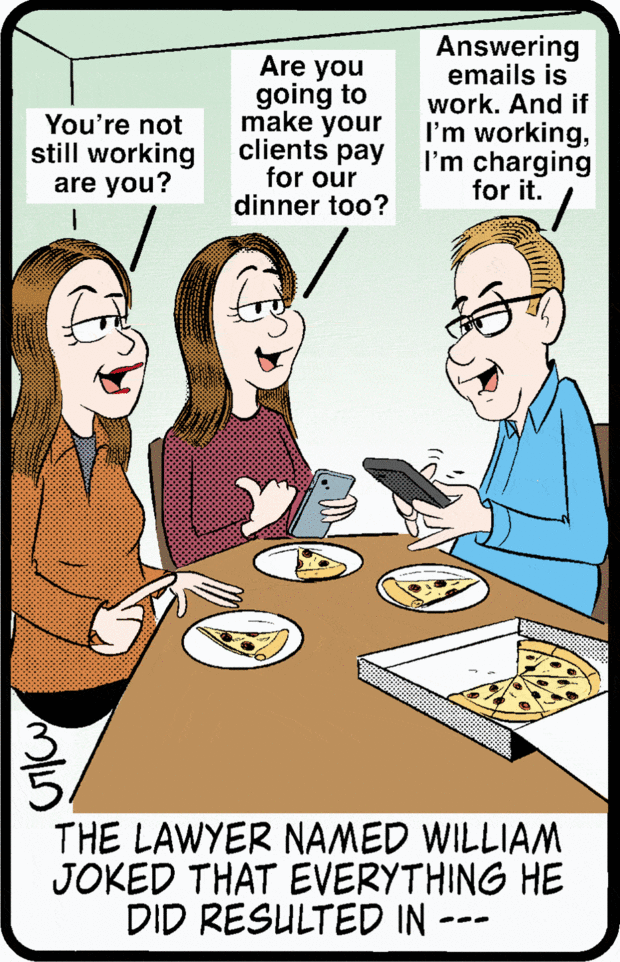
THE LAWYER NAMED WILLIAM JOKED THAT EVERYTHING HE DID RESULTED IN —
Jumble Cartoon 03/05/2026
RLLABIOSHUBLE
🎯 Guess the Final Answer!
01
🌟 What's Special Today
Topical hooks and real-world connections
Topical AuthoritySemantic Entities
⚖️
Lawyer William's Big Joke
Today's cartoon features a lawyer named William who makes a funny pun about his job. The puzzle hints at something lawyers track very carefully when working.
🎭
Theme: Professional Wordplay
This puzzle connects four everyday words to a punchline about the legal profession. Lawyers and accountants will definitely get a kick out of this one.
📅
This Day In History
March 5, 2026 marks another day of clever newspaper puzzles making readers groan and laugh. Jumble has been entertaining families since 1954.
🔍
Pattern: Mix of Lengths
Today's word puzzle uses four different scrambled words with varying lengths. This mix keeps solvers engaged and tests different unscrambling skills.
02
📚 Word Meanings
Dictionary-quality definitions for vocabulary building
E-E-A-T: ExpertiseFeatured Snippet

👆 Tap each card to reveal the meaning

DRILL
Noun. A tool that spins to make holes in wood, metal, or other materials. Also means practicing something over and over until you get really good at it.
▼ Tap to reveal
CABIN
Noun. A small house, usually made of logs, often found in the woods or mountains. It's cozy and simple, perfect for a weekend getaway or vacation.
▼ Tap to reveal
POLISH
Verb. To rub something until it shines and becomes smooth and glossy. Also means to improve something by working on details to make it better.
▼ Tap to reveal
HUMBLE
Adjective. Not bragging or showing off. Being humble means you're modest about your abilities and don't think you're better than other people.
▼ Tap to reveal
03
🧠 How Words Solved
Expert solving methodology step by step
E-E-A-T: Experience

👆 Tap each word to see the solving trick

LIRDLDRILL
Start with LIRDL by spotting the double L. Rearrange the remaining D, I, R to find DRILL, a common tool you use in shops or construction.
BNACICABIN
Look at BNACI and notice the B and N together. Flip the letters around with A, C, I to discover CABIN, a small cozy house in nature.
OLHPSIPOLISH
Tackle OLHPSI by recognizing the common ending ISH. Put P, O, L together with that ending to unscramble POLISH, meaning to shine something up.
MEHLBUHUMBLE
Work through MEHLBU by finding the HUM at the start. Add B, L, E to complete HUMBLE, a word describing someone who's not boastful.
04
🏗 Final Answer Built
How circled letters combine to form the solution
DRILL
D
R
I
L
L
CABIN
C
A
B
I
N
POLISH
P
O
L
I
S
H
HUMBLE
H
U
M
B
L
E
Colored letters combined →
BILLABLE HOURS
05
🎨 Cartoon Explained
Deep analysis of wordplay and pun structure
E-E-A-T: Expertise

Picture a lawyer named William sitting at his desk in a fancy office. He's grinning widely, thinking about all the work he's been doing for his clients. His brain is probably full of notes, meetings, and phone calls.

The humor comes from a clever pun about lawyers and their time. William is joking that no matter what he does, his clients end up paying for every single minute he works. Lawyers track their time very carefully because they charge money for it. His joke is pretty funny because it's true.

This one lands really well because anyone who knows how lawyers work will laugh right away. The puzzle gives you hints with words like DRILL and POLISH, which are things William might do in his job. Overall, it's a smart joke about how lawyers charge for their time. 8/10 for cleverness.

06
🌎 Word Origins
Etymology and linguistic history of each solved word
Deep Authority
DRILL
Old Dutch
The word DRILL comes from an old Dutch or German word that meant to bore or make a hole. Sailors and builders used drills for hundreds of years. Over time, it also came to mean practicing something repeatedly, like drill practice.
CABIN
Old French
CABIN comes from Old French words meaning a small room or hut. Sailors used the word for tiny sleeping spaces on ships. Eventually, it meant any small, simple house, especially ones in forests or mountains far from cities.
POLISH
Old French
POLISH started as an Old French word meaning to make smooth or shiny. It comes from Latin words about smoothing and brightening. People have been polishing metals and wood for thousands of years to make them gleam.
HUMBLE
Latin
HUMBLE comes straight from Latin word meaning low or near the ground. It connects to the word humus, which is soil or dirt. Being humble originally meant being low or modest, just like staying close to the earth.
07
📊 Difficulty Rating
Expert assessment with detailed analysis
E-E-A-T: Authority
⭐⭐ Easy

The four scrambled words are all common, everyday words that most people know. DRILL, CABIN, POLISH, and HUMBLE don't have tricky letter combinations or unusual arrangements. Even if you get stuck on one, the cartoon clue really helps you figure out the final answer.

The bonus puzzle might trip you up a little bit, but the first four words are straightforward. This is a great puzzle for beginners or for warming up your brain on a Wednesday morning.

4
Words
22
Letters
~2m
Avg Time
08
💡 Pro Tips
Actionable solving strategies for today's puzzle
🎯
Read Cartoon Clues
The cartoon picture and joke give you huge hints about the final answer. Pay close attention to details in the drawing and what the characters are saying.
🔤
Spot Double Letters
When you see LIRDL with two L's, it's easier to find patterns. Double letters are like a treasure map leading you straight to the answer.
📝
Say Words Out Loud
If you're stuck, try saying the scrambled letters out loud. Sometimes hearing the sounds helps your brain unscramble them faster than just looking.
✏️
Use the Bonus Circles
Write down the circled letters from each solved word in order. These letters unscramble to make the final answer that explains the cartoon joke.
09
❓ Frequently Asked Questions
Common queries answered with expert insight
FAQ Schema
What are the Jumble answers for March 5, 2026?

Today's four solved words are DRILL, CABIN, POLISH, and HUMBLE. These anagrams were created by David L. Hoyt and Jeff Knurek, the talented puzzle constructors behind the daily Jumble. Each scrambled word unscrambles into a common word that helps solve the puzzle.

Once you've solved all four words, you'll use certain letters from each answer to unscramble the bonus phrase. This final answer connects to the funny lawyer joke shown in today's cartoon. The whole puzzle works together beautifully.

 
How does the bonus unscramble mechanic work?

After you solve the four main words, you'll notice some of the letters are circled or marked in a special way. Write down those letters in order, and you'll have a new scrambled phrase to unscramble. This bonus answer solves the riddle from the cartoon and explains the joke.

It's like a puzzle within a puzzle. The first four words are just warm-ups. The real challenge and payoff comes when you rearrange the bonus letters. This two-step format is what makes Jumble so much fun.

 
What's the best way to solve LIRDL, BNACI, OLHPSI, and MEHLBU?

Start by looking for familiar letter patterns in each scrambled word. With LIRDL, spot those two L's right away. With BNACI, notice B and N are sitting together. These clues help your brain find the real word hiding inside. Try saying the letters out loud if you get stuck.

Don't be afraid to write down different combinations on paper. Sometimes seeing the letters rearranged helps you spot the answer faster. Once you solve one word, the others usually come easier because your brain gets into the rhythm of unscrambling.

 
Where do these words come from and what do they mean?

DRILL comes from old Dutch and German words meaning to bore or make holes. It also means practicing something over and over. CABIN comes from Old French and originally meant a small room on a ship, then became any tiny simple house. POLISH comes from Latin roots meaning to smooth and shine. HUMBLE also comes from Latin and originally meant being low or near the ground, like soil.

All four of these words are super useful in everyday English. You'll hear them in conversations, read them in books, and use them yourself. Understanding their origins helps you remember them better and appreciate how language grows over time.


Similar Posts

Leave a Reply

Your email address will not be published. Required fields are marked *