🍌
Banana Ripening Science
Bananas produce ethylene gas that speeds up ripening. They can go from yellow to brown spots in just 24 to 48 hours when stored at room temperature.
⏱️
Speed Pun Theme
Today's Jumble plays with the idea of super fast time. The cartoon pun connects fruit ripening to an extremely short moment, making a funny comparison.
📅
This Day History
May 15, 2026 marks the start of summer fruit season. Grocery stores stock up on bananas, strawberries, and other fresh produce for family gatherings and picnics.
🧩
Pattern Observation
This puzzle uses four solid vocabulary words plus a clever final answer built from bonus letters. All four solved words are common household items or actions you see every day.
CEASE
Verb. To stop doing something or to end. When you cease an activity, you quit it completely. It's a formal way to say 'stop'.
▼ Tap to reveal
ONION
Noun. A round vegetable with papery skin that grows underground. Onions have layers inside and make you cry when you cut them. They taste sharp and spicy.
▼ Tap to reveal
HARBOR
Noun. A sheltered place where boats and ships stay safe from rough ocean waves. Also used as a verb meaning to keep a feeling or thought inside you secretly.
▼ Tap to reveal
CANNED
Adjective. Food that's been sealed in metal containers to stay fresh for months or years. You can also say 'canned' to mean fired from a job or rejected.
▼ Tap to reveal
Look for common letter pairs like C and E in SACEE. Start with the double E sound, then add the C, A, and S to build CEASE quickly.
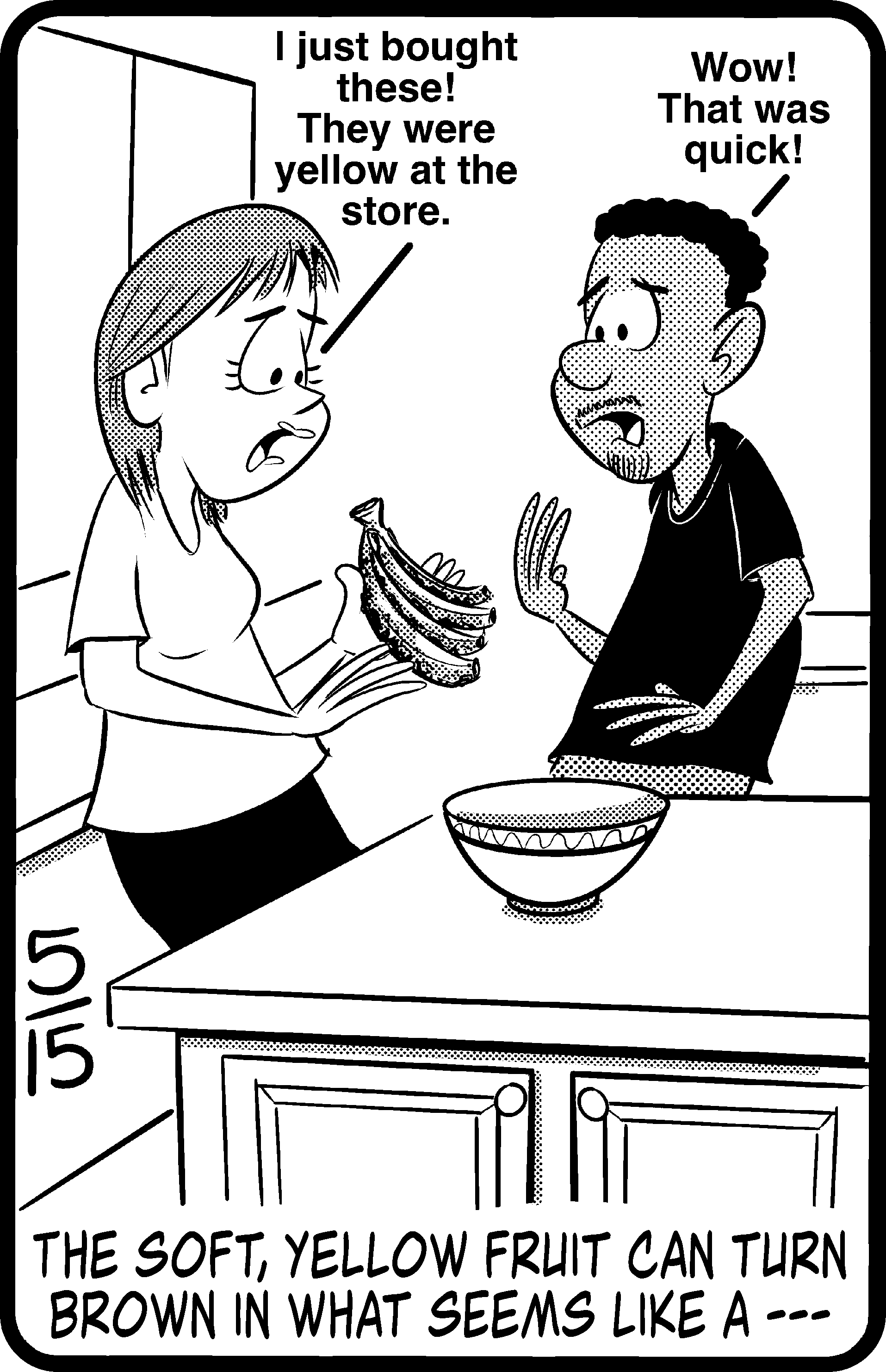
The cartoon shows a bunch of bananas sitting on a kitchen counter. They're bright yellow and look perfectly fresh. Then a clock appears showing how quickly they turn brown and spotty.
The humor comes from comparing a banana's ripening time to a nanosecond, which is one billionth of a second. It's ridiculously fast in real life, but the joke makes it sound like bananas ripen almost instantly. The pun plays on how quick the change actually feels.
This lands hard because anyone who buys bananas knows they don't stay yellow for long. The exaggeration makes it funny and relatable at the same time. Plus, the time comparison is unexpected and clever. Rating: 8/10 for cleverness.
🎯
Letter Frequency First
Always count vowels and consonants first. Today's puzzle has lots of vowels, so look for them early. They anchor your unscrambling strategy.
🔤
Say Words Aloud
Sound out scrambled combinations as you try them. Sometimes your ear catches real words faster than your eyes. This trick works great for medium difficulty puzzles.
💡
Bonus Round Strategy
Don't ignore those bonus letters. Write them down separately and look for common word patterns. Time-related words appear often in Jumble cartoon answers.
📝
Common Word Patterns
Remember double letters and word endings like ED, ING, and ER. These patterns solve quickly in newspaper word puzzles and anagram games.
CEASE
Old French
Comes from the Old French word 'cesser,' meaning to stop or leave off. It traveled into English through Norman influence and keeps its simple, strong meaning today. Perfect for newspaper puzzles.
ONION
Latin
Traces back to the Latin word 'unio,' meaning a single large pearl or unity. Onions were compared to pearls because of their layered structure. The name stuck and spread across Europe through different languages.
HARBOR
Old English
Built from Old English 'herebeorgan,' which means to give shelter or protection. 'Here' meant army and 'beorgan' meant to protect. It describes a safe place where ships and people find refuge from danger.
CANNED
Latin
From the word 'can,' which came through various European languages from Latin 'canna,' meaning a reed or tube. Metal cans were invented to preserve food, giving us the word we use today for preserved goods.
What are the Jumble answers for May 15, 2026?▼
Today's Jumble answers are CEASE, ONION, HARBOR, and CANNED. These four solved words come from the scrambled puzzles at the top of the page. The Jumble was created by David L. Hoyt and Jeff Knurek, who design these brain teasers for newspaper readers every single day.
Once you solve these four words, you'll use the circled letters to complete the final cartoon answer. That's where the real puzzle challenge happens in this word game.
How does the bonus final answer work?▼
After you solve the four scrambled words, certain letters are circled. You take those circled letters and rearrange them to answer the cartoon clue. Today's clue is about how fast a banana can change color, and the answer is a fun time-related phrase.
This final step is what makes Jumble different from regular anagram puzzles. It rewards you for solving the four words and gives you one more challenge to complete the puzzle.
What's the best way to solve SACEE, INONO, ORHRBA, and ANEDNC?▼
Start by looking at the letter combinations in each scrambled word. SACEE has a double E, which is a big hint. INONO has a double O that stands out. Once you spot those patterns, the other letters fall into place more easily.
Write the solved words down and circle the letters that match the circles in the puzzle grid. Don't rush this step, because those circled letters are your key to the final answer. Take your time and you'll catch everything.
Why do certain words appear again in Jumble puzzles?▼
Common household words like ONION, HARBOR, and CANNED show up regularly because readers know them well. This makes the puzzle fair and solvable for all skill levels. Jumble creators pick words that work with today's cartoon clue.
Even though you might solve these words again in future puzzles, they'll be scrambled differently each time. That's what keeps the challenge fresh and interesting for daily puzzle fans.