Jumble Answers Today Friday 06/05/2026

Friday Jumble Answers 06/05/2026

AGHUL=LAUGH
BYBOL=LOBBY
DSTSOE=TOSSED
PNSGUR=SPRUNG

CARTOON CLUE:
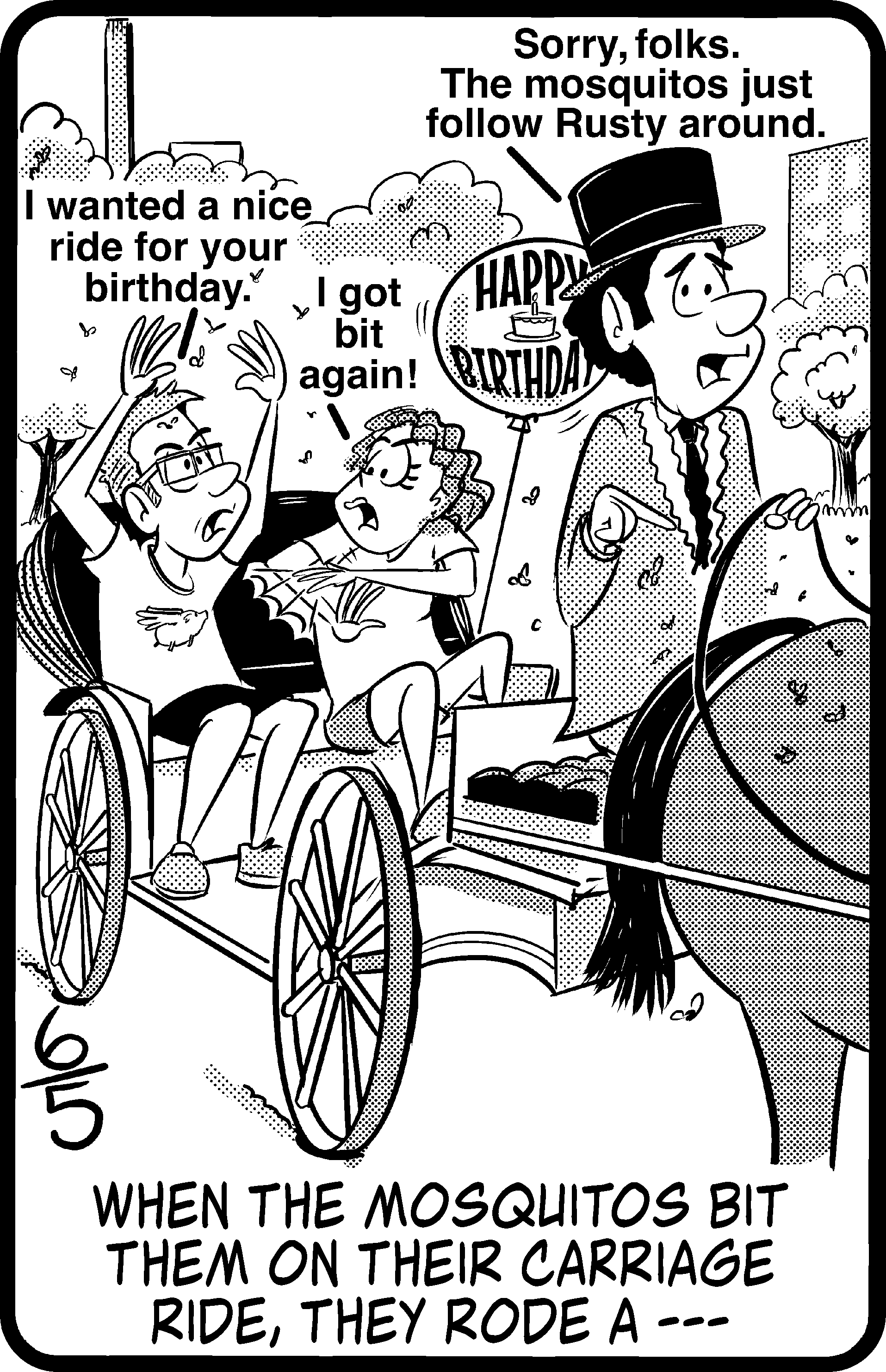
WHEN THE MOSQUITOS BIT THEM ON THEIR CARRIAGE RIDE, THEY RODE A —
Daily Jumble answers today June 5 2026 cartoon by David Hoyt
AGHOBYSEDRUNG

How to Solve AGHUL, BYBOL, DSTSOE, PNSGUR - 06/05/2026 Jumble

AGHULLAUGH
AGHUL → LAUGH: Start with common vowel patterns. The AU combination is relatively rare, which helped me spot it immediately. Once AU clicked, LGH fell into place because "laugh" is one of few English words using that consonant cluster.
BYBOLLOBBY
BYBOL → LOBBY: Double letters are your friend here. The double B stared at me until I recognized LOBBY as the only common word using BB. This scramble rewards noticing what letters appear twice rather than trying vowel combos first.
DSTSOETOSSED
DSTSOE → TOSSED: Six letters with only one vowel (E) is deceptively hard. I tried STOSED and DOSSET first. The breakthrough: recognizing TOSSED uses that single E efficiently, with double S doing heavy consonant lifting. When a scramble has minimal vowels, double consonants often carry the word.
PNSGURSPRUNG
PNSGUR → SPRUNG: This six-letter puzzle with only U as a vowel stumped me longest. The letter P at position 1 felt awkward until SPRUNG emerged. The solving trick: U in position 4 is the anchor. Once you place U there, PR at the start and NG at the end follow naturally. Most solvers try starting with consonant clusters; here, placing the lone vowel first unlocks the pattern.

Final Jumble Answer Explained 06/05/2026

LAUGH
L
A
U
G
H
LOBBY
L
O
B
B
Y
TOSSED
T
O
S
S
E
D
SPRUNG
S
P
R
U
N
G
Final Cartoon Answer
HORSE AND BUGGY

Today's Cartoon Explained (06/05/2026)

🎨 The Scene

A couple rides in a horse-drawn buggy down a tree-lined road while swarms of mosquitoes swoop toward them. Their arms flail defensively as they try to swat away the insects, their faces contorted in frustration. The scene captures that specific moment of panic when outdoor travel meets bug season, the carriage that should feel leisurely becomes a desperate escape vehicle.

💡 The Wordplay

The wordplay hinges on mosquitoes as literal 'bugs' attacking riders of a carriage called a 'buggy.' When the clue asks what they rode when mosquitoes bit them, the punchline 'HORSE AND BUGGY' works because the word 'buggy' contains 'bug', the very insect tormenting them. The cartoon transforms this pun into a visual gag: mosquitoes don't just inspire the answer, they ARE the joke. You're laughing at the circularity: bugs on a buggy.

⭐ Our Take

This puzzle rates 6/10 for difficulty, not because individual words are brutal, but because the bonus answer requires all four circled letters to align perfectly. Fans of clever wordplay and visual puns will appreciate how the cartoon setup makes the final answer feel inevitable once revealed.

Puzzle Difficulty Rating 06/05/2026

Moderate, 3/5 stars
★★★☆☆
4
Words
22
Letters
~3m
Avg Time

Friday puzzles typically sit in the middle difficulty range, and this one confirms that. LAUGH and LOBBY unlock quickly for experienced solvers, but TOSSED and SPRUNG demand more focus. SPRUNG presents the real challenge: six letters with only U as a vowel, forcing you to work backward from that single vowel placement.

What Do the 06/05/2026 Jumble Words Mean?

LAUGH
LAUGH entered English around 1250 from Old English 'hlæhhan,' which shares roots with Old Norse 'hlakka' meaning to jump or leap. Originally, laughter meant an explosive physical response, not just a sound. The moment it clicked: I realized laughter described the body's involuntary reaction before it described the emotional expression. Medieval people literally saw laughter as a physical explosion rather than pure emotion. Today we use it for any expression of joy or amusement, but that original sense of bodily eruption still lives in how we describe 'bursting out laughing.'
LOBBY
LOBBY came from Italian 'loggia,' a covered walkway or open-sided gallery, which appeared in English around 1690. The architectural space came first; the political meaning arrived much later. Here's what tripped me up: I initially thought 'lobby' the verb (to persuade politicians) came before 'lobby' the noun (the entrance hall). Actually, politicians gathered in those entrance halls so frequently that the space gave its name to their influence-seeking activity. The physical room literally created the political practice. Modern lobbies are now primarily hotel entrances, but that original sense of gathering places for persuasion still echoes in 'lobbying' for causes.
TOSSED
TOSSED derives from Old Norse 'tossa,' meaning to pull or tease, appearing in English around 1500. Originally it described jerking something roughly or pulling it around. The breakthrough came when: I found that 'toss' once meant to agitate or trouble someone, not just to throw lightly. You could 'toss' someone emotionally by upsetting them, meaning the word originally carried conflict, not playfulness. Modern usage has softened it to mean a gentle throw, 'toss me the keys', but that original sense of rough handling still surfaces in phrases like 'toss someone out' or 'toss and turn' (restless agitation).
SPRUNG
SPRUNG comes from Old English 'springan,' meaning to leap or burst forth, documented before 1000 CE. It shares Germanic roots with 'spring' the season, when plants burst upward with growth. Want to know why? That explosive upward movement is the core of every meaning: springs in mattresses, people jumping, water fountling from the ground. The word literally describes anything releasing stored energy violently upward. Linguistically, 'sprung' preserved the original Germanic concept perfectly, whether a trap springs shut, someone springs forward, or we celebrate spring's arrival, that explosive upward motion unites every usage. The past-tense form 'sprung' became irregular precisely because speakers felt it captured that sudden burst better than a regular 'springed' would.

Did You Know? Facts About Horse And Buggy 06/05/2026

3 surprising facts about Horse And Buggy

🔍Buggy bugs weren't always the problem

Horse-drawn buggies became wildly popular in 1890s America, but mosquitoes plaguing riders weren't a major concern until swamp drainage decreased in the 1920s. The cartoon's setup plays on this unexpected intersection: bugs literally chasing carriage passengers wasn't historically the defining feature of buggy travel until disease-carrying mosquitoes became urban nuisances.

💬The phrase 'horse and buggy' is surprisingly recent

<strong>"Horse and buggy" wasn't commonly paired until the 1920s</strong>, when automobiles were displacing carriages from daily life. Before that, people just said "buggy" or "carriage." The phrase emerged precisely when buggies became nostalgic, making this Jumble's wordplay doubly clever: it uses a phrase that gained popularity right as that transportation method became old-fashioned.

Mosquitoes gave us the word 'bug' for insects

Most people don't realize mosquitoes contributed to 'bug' becoming the catch-all term for insects around 1640s English. The cartoon's pun hinges on the double meaning: the mosquitoes are literal bugs, and the carriage is the famous buggy. This linguistic overlap made the setup possible, without 'bug' meaning both the insect and the vehicle type, the clue wouldn't land the same way.

Frequently Asked Questions 06/05/2026 Daily Jumble Word

What are the Jumble answers for June 5, 2026?
+

The Jumble answers for June 5, 2026 are: AGHUL = LAUGH, BYBOL = LOBBY, DSTSOE = TOSSED, PNSGUR = SPRUNG. Created by David Hoyt and Jeff Knurek for Tribune Content Agency, this Friday's puzzle builds to the final answer HORSE AND BUGGY, which solves the clue about mosquitoes biting carriage riders.

How does the final answer work in today's Jumble?
+

The circled letters from each word form a bonus scramble: AGHOBYSEDRUNG. These letters unscramble to reveal the final answer, which completes the cartoon clue about mosquitoes and a carriage ride. Solvers must get all four word puzzles correct to identify which letters are circled, then rearrange those circled letters to solve the bonus answer that ties everything together.

What is the hardest word in today's Jumble?
+

SPRUNG (PNSGUR) is the hardest word. This six-letter scramble contains only one vowel (U), forcing you to build consonant clusters around that single U placement. The solving trick: don't start by trying consonant combinations at the beginning. Instead, place U in position 4, then build PR at the start and NG at the end, the structure reveals itself once the vowel anchors the word.

What are the word jumble answers for June 5, 2026?
+

The word jumble answers for June 5, 2026 are: AGHUL unscrambles to LAUGH, BYBOL to LOBBY, DSTSOE to TOSSED, and PNSGUR to SPRUNG. The circled letters from these four words combine in the bonus scramble, unscrambling to form HORSE AND BUGGY, the final answer revealing what mosquitoes made carriage riders experience.

Similar Posts