Jumble Answers for 05/03/2026
TODAY JUMBLE ANSWER

What's Special Today
Word Meanings
👆 Tap each card to reveal the meaning
Previous Usage
How Words Solved
Final Answer Built
Cartoon Explained
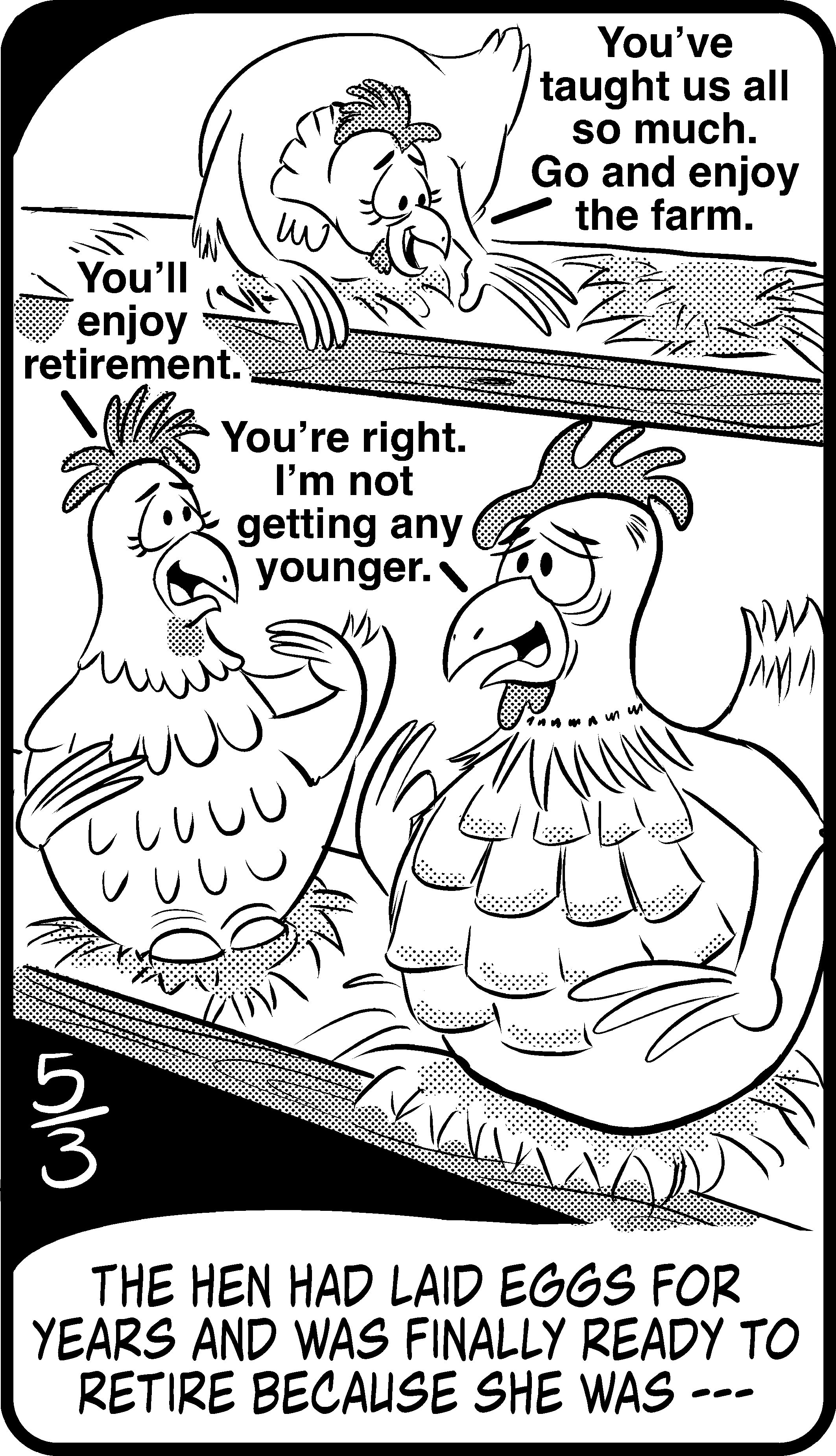
A tired hen stands in a farmer's yard with gray feathers and slow movements. She's been laying eggs every single day for so many years. The farmer smiles and says she's finally ready to stop working and enjoy retirement.
The humor comes from a famous saying called 'no spring chicken.' This means someone is getting old and isn't as young anymore. Spring is when baby chickens hatch, so calling someone 'no spring chicken' is a funny way of saying they're not young. The cartoon takes this saying literally by using an actual old hen who can't keep working.
This joke lands perfectly because it works two ways at once. First, it's about a real chicken being old. Second, it uses a common grown up saying about aging. Kids think it's silly that we have special phrases about chickens for people. That double meaning makes it about 8 out of 10 for cleverness.
Difficulty Rating
Pro Tips
Word Origins
Frequently Asked Questions
Today's solved words are MUSCLE, ENOUGH, IRONIC, TRIVIA, PIGEON, and UNPACK. These six words came from the scrambled letters SLMEUC, GONHEU, OCNIRI, AVITIR, ENGPOI, and CPAUKN. Creators David L. Hoyt and Jeff Knurek designed this puzzle with a fun farm theme.
Once you solve all six words, you'll use the circled letters to create the final answer. This bonus round is where the real humor lands. The setup about a retiring hen guides you toward the punchline message.
After solving all six scrambled words, certain letters are circled in each answer. You take those circled letters and unscramble them one more time. They form a complete phrase that answers the joke setup about the hen.
The bonus letters SCENHONCRIIGNPK contain your final answer hidden inside. This second puzzle uses all your solving skills in a new way. It's the satisfying payoff after you've cracked all the main words.
Start by looking for common word patterns and chunks. Notice that SLMEUC has an M and U close together, which might suggest MUSCLE. GONHEU contains N, O, U, G which often appear in words like ENOUGH. Breaking scrambles into smaller pieces helps your brain recognize them.
If you're stuck, move to the easier looking ones first. PIGEON and UNPACK use familiar everyday words. Once you solve two or three, confidence builds and the others fall into place faster. The key is not rushing and sounding words aloud.
English borrowed IRONIC from ancient Greek because we needed a word for that specific funny concept. TRIVIA came from Latin roots that described gathering places. Over centuries, different languages influenced English as people traded and traveled.
Knowing where words come from helps you remember them better. MUSCLE literally meant 'little mouse' in Latin. PIGEON comes from baby chick sounds in French. These origin stories make words stick in your brain longer than just memorizing definitions.