
Jumble Answers for 04/10/2026
TODAY JUMBLE ANSWER
👆 Tap each card to reveal the meaning
👆 Tap each word to see the solving trick
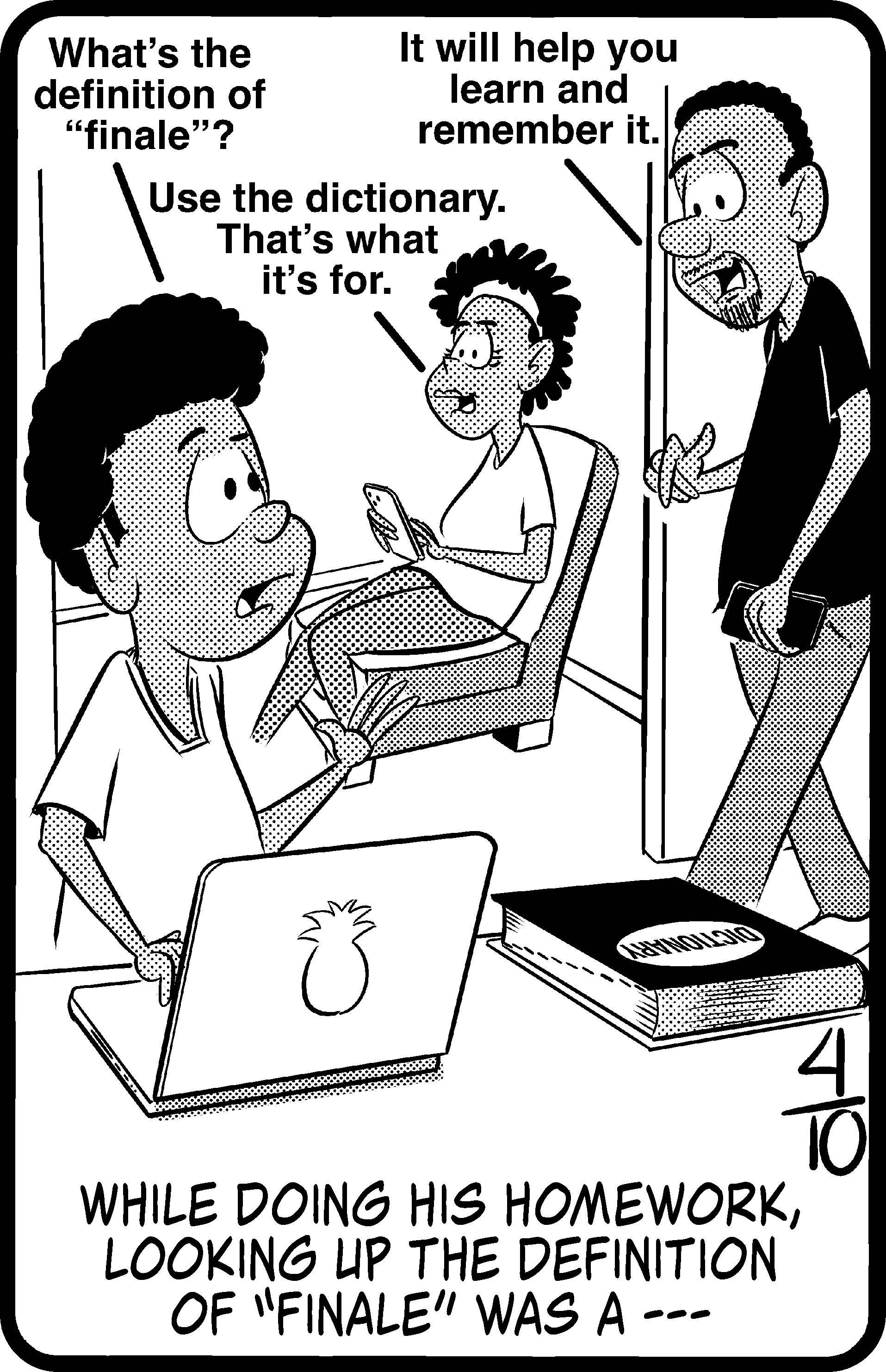
A student sits at a desk with homework spread out, looking confused at a dictionary. He's looking up the word "finale" to understand what it means for his assignment. The moment is relatable because most kids struggle with homework definitions.
The humor comes from a pun on the word "finale." A finale is the end of something, like the final scene of a play or movie. So looking up what "finale" means becomes a way to describe the homework itself, as if homework is the ending or conclusion to his studying efforts.
This joke lands really well because it connects studying to finishing things. The pun is smooth and makes you smile once you get it. I'd give this one an 8/10 for cleverness because it needs a moment to sink in, but it's definitely worth the laugh.
para1
The visual scene shows a student at a desk with homework materials and a dictionary open. He looks puzzled while looking up the definition of "finale," which means the final part or ending of something.
The humor comes from a play on words with "finale." Since finale means the ending, the joke suggests that homework research itself becomes the ending or conclusion of his study session. It's a witty connection between the definition and the situation.
para3
This joke works because it blends school life with clever wordplay that kids and adults enjoy. The connection feels natural, and the pun is smooth enough to make you groan and smile. I'd rate it 8/10 for how well it makes the connection between definition and situation.
TEASE and ADMIT are straightforward five letter words that most solvers spot quickly with their common letter patterns. CANNON and BANTER are slightly trickier because they're six letters, but the double letters in CANNON and the smooth flow of BANTER help you crack them with solid anagram skills.
This puzzle sits right in the sweet spot for medium difficulty. You won't struggle too long, but it needs focus and letter rearrangement to nail all four words. The final answer is the real challenge, connecting everything together with smart thinking.
The four solved words for today's Jumble are TEASE, ADMIT, CANNON, and BANTER. These answers come from the scrambled words EESTA, DMTAI, NNOCNA, and NBTRAE. The puzzle was created by David L. Hoyt and Jeff Knurek, the talented team behind Jumble.
Once you unscramble all four words correctly, you'll use the circled letters to solve the final answer. The cartoon clue about homework and looking up definitions will help guide you toward the right solution. Take your time with each word, and the bonus answer will come together naturally.
After you solve the four main word puzzles, certain letters from each answer are circled. You take those circled letters and unscramble them to create the final bonus answer that connects to the cartoon clue.
Today's bonus uses letters from TEASE, ADMIT, CANNON, and BANTER to form a complete phrase. The cartoon gives you context clues, so think about what message or idea the picture is telling you while you arrange the bonus letters.
Start by looking for patterns like double letters or common letter chunks. NNOCNA has two N's together, which points you toward CANNON. Sound out possible words as you rearrange letters, saying them out loud to see if they're real words.
Write the scrambled letters on paper and physically move them around. Group vowels with consonants in different ways until something clicks. If you're stuck, think about words that relate to the cartoon clue or puzzle theme to guide your guessing.
BANTER comes from French and traveled to England in the 1600s, bringing playful teasing with it. CANNON has a cool journey from Italian through Old French, based on the Latin word for reed because early cannons looked like hollow tubes.
Both words show how English borrows from other languages and keeps them alive for hundreds of years. Understanding where words come from helps you remember them better and appreciate how language connects across different cultures and time periods.