Jumble Answers for 04/03/2026
TODAY JUMBLE ANSWER

👆 Tap each card to reveal the meaning
👆 Tap each word to see the solving trick
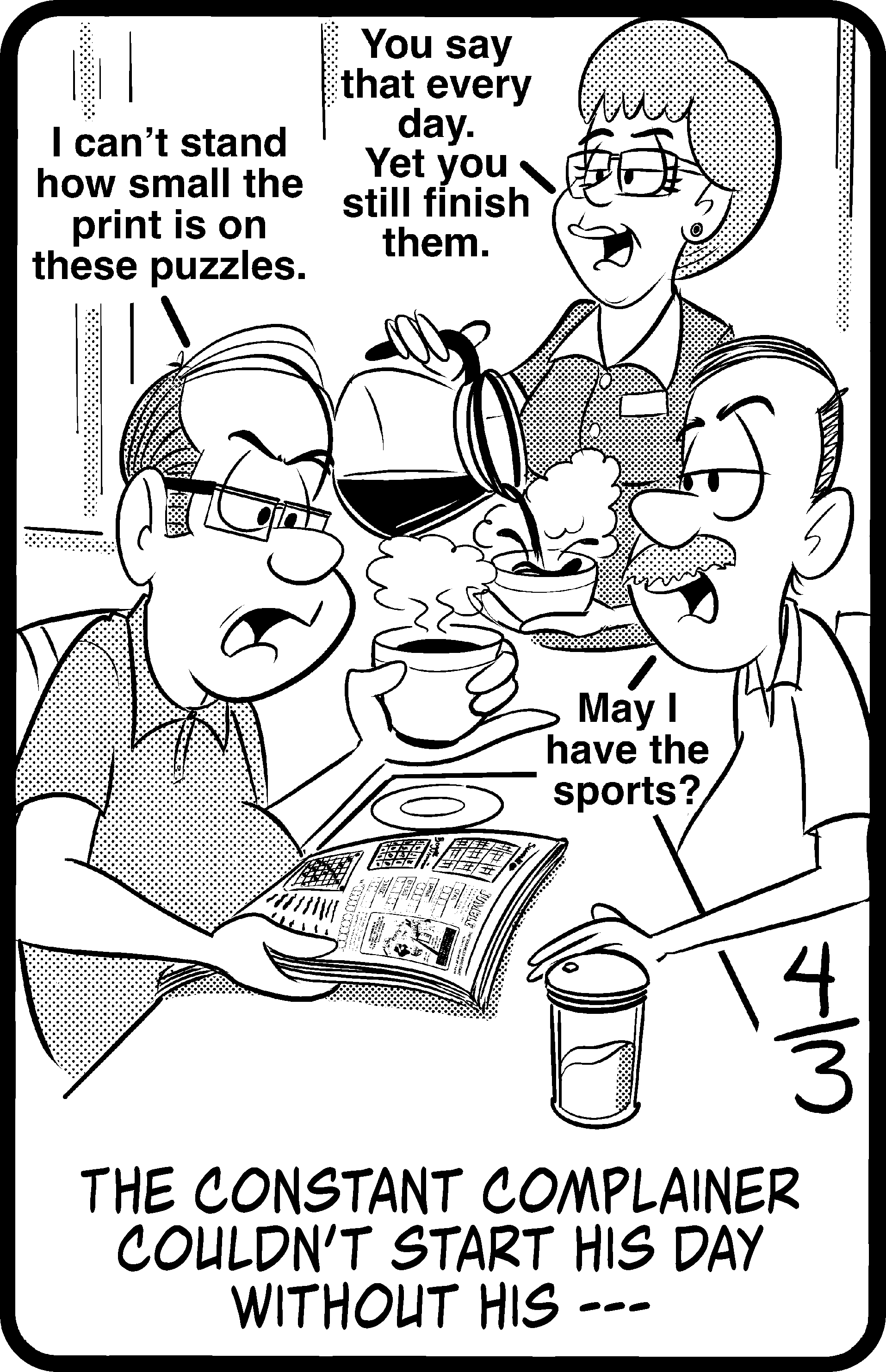
Picture a grumpy person sitting at their kitchen table early in the morning, looking super angry and complaining about everything. Dark circles under their eyes. Their coffee cup sits right in front of them, steaming hot.
The humor comes from playing with the word 'moaning.' It sounds like 'morning' but actually means complaining and grumbling out loud. So someone who moans about stuff can't start their day without their moaning coffee, which means they're complaining even before they drink it.
This lands really well because so many people actually ARE grumpy before coffee. We've all seen someone like this. It's relatable and funny. The pun works on two levels at once. 8/10 for cleverness because it catches most solvers off guard.
YOUNG and WAFER are pretty straightforward anagrams. Most solvers crack these in seconds. PODIUM and INFECT demand more letter juggling, though. They're longer and the letters scatter in trickier ways.
The final answer pushes this from easy to medium because 'moaning' is such a smart wordplay on 'morning.' The pun isn't obvious, so you can't just guess it. You actually need to solve those scrambled letters and let the cartoon clue guide you.
Today's four solved words are YOUNG, WAFER, PODIUM, and INFECT. These anagrams come from the scrambled word puzzle created by David L. Hoyt and Jeff Knurek, who design Jumble puzzles that appear in newspapers everywhere.
Once you unscramble these four words correctly, you use the circled letters to solve the bonus puzzle. The bonus challenge ties back to the cartoon clue about someone who loves to complain. It's a two-step solving process, and it's why Jumble remains so addictive for word puzzle fans.
After you solve the four main anagrams, certain letters in each word get circled. You take those circled letters and rearrange them to create the final answer, which directly connects to the cartoon clue shown above the puzzle.
This mechanic makes Jumble special. You're not just unscrambling random words. You're gathering clues that lead somewhere meaningful. The final answer always relates to the cartoon's funny situation, making the whole puzzle feel like a complete joke or punchline.
Start by looking for familiar letter combinations and common endings. Words often end in ED, ER, ING, or LY. Spot vowels first, then build consonant clusters around them. This helps your brain recognize word shapes faster.
For tough scrambles, try saying them out loud. Hearing the letters differently sometimes makes patterns jump out. Work through these four steps: identify common letter pairs, place vowels, add common consonant combinations, then test if it makes a real word. You'll develop an instinct over time.
YOUNG traces back over 1,000 years to Old English roots. WAFER borrowed from French bakery culture, showing how food words travel between countries. PODIUM came directly from Roman times when speakers needed platforms for addressing crowds.
INFECT developed from Latin words meaning 'to spoil' or 'to stain.' Each word carries history within it. Understanding where words originated helps you remember them better and appreciate the language's complexity hidden inside simple puzzles.