Jumble Answers for 04/02/2026
TODAY JUMBLE ANSWER

👆 Tap each card to reveal the meaning
👆 Tap each word to see the solving trick
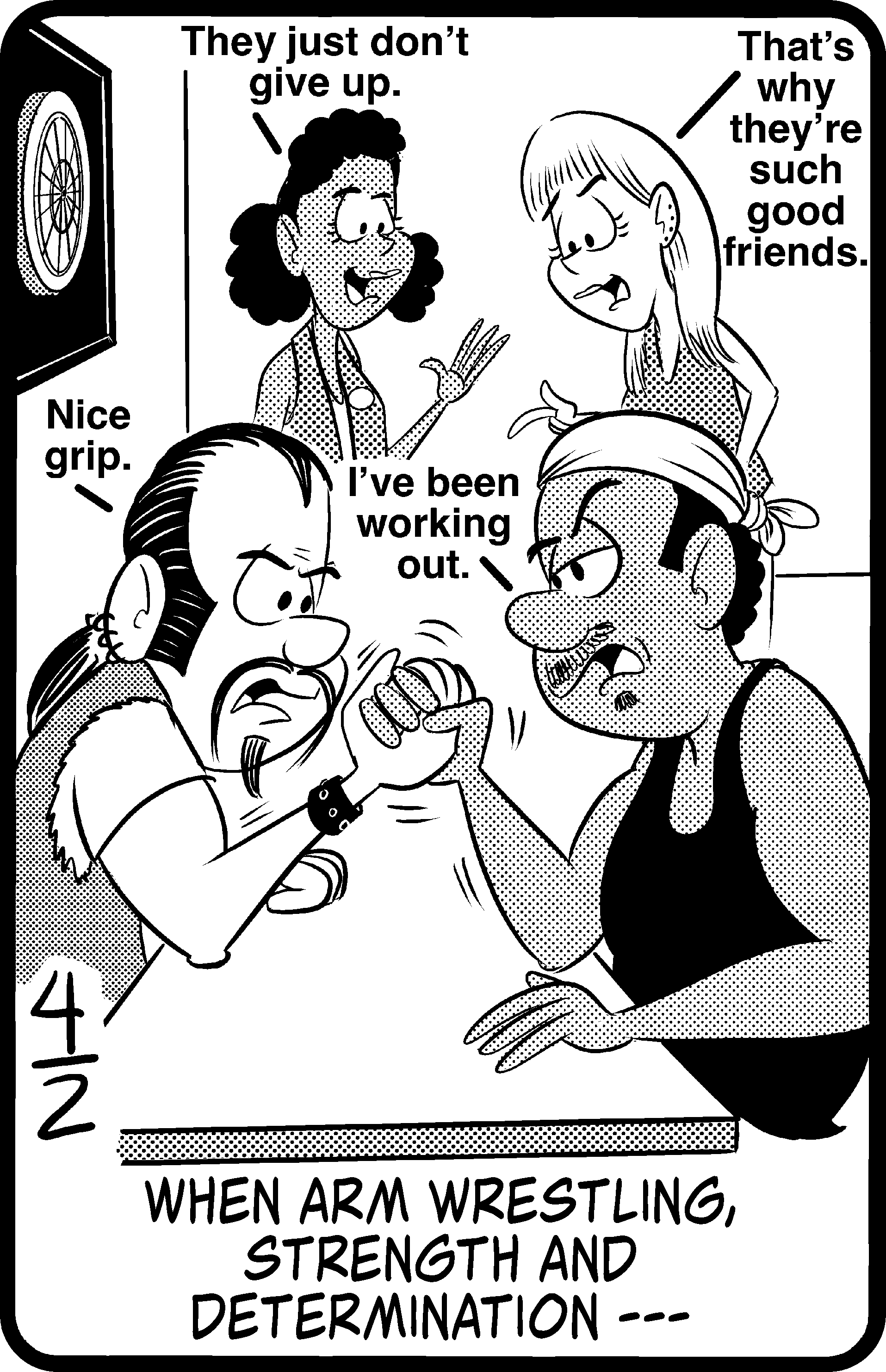
Picture two wrestlers with their arms locked together, muscles flexing, both trying to push the other down. Sweat is flying. One person is super strong, but the other has focus and won't quit.
The humor comes from the double meaning of 'hand in hand.' The puzzle talks about arm wrestling, so you think about arms and hands. But the phrase also means working together or matching up perfectly. Two things that go hand in hand fit together like teammates.
It lands perfectly because the cartoon shows two people connecting at the hands while wrestling. The puzzle wants you to realize that strength alone doesn't win. You need determination too, and together they're unstoppable. That's a clever way to sneak in a partnership message. 8/10 for cleverness because it uses the body part you're thinking about in a totally different way.
The scrambled words here are medium challenge. AGAIN and CHANCE are pretty common words most people know. But UNDONE and WIDTH take a bit longer because they're less used in everyday talking. The bonus puzzle is tricky because you need all four word answers first.
If you're like me, you'll solve three words quickly and get stuck on the fourth for a minute. UNDONE usually causes the pause because people don't say it as much. Once you get all four, the final answer comes together fast because the phrase is so familiar from everyday life.
Today's four Jumble word answers are AGAIN, WIDTH, UNDONE, and CHANCE. These everyday words might seem familiar, but finding them in the scrambled letters takes some focus. Created by David L. Hoyt and Jeff Knurek, this puzzle uses the cartoon clue about arm wrestling to guide you toward the final answer.
Once you unscramble all four words correctly, you'll use specific letters from each answer to solve the bonus puzzle. That's where the real fun happens. The bonus uses letters that are circled or marked in the original puzzle, and you rearrange those selected letters into the punchline that completes the cartoon's joke.
After solving the four main word answers, you'll notice certain letters are circled or highlighted in each word. These special letters become your bonus puzzle pieces. You take those marked letters and rearrange them into a new phrase or sentence.
This bonus phrase is the punchline to the cartoon clue. It's like a secret message hiding inside your four solved words. The final answer always connects directly to the cartoon's joke or situation. It's the reason the puzzle is fun, and it's why you work through all the scrambled words in the first place. Every letter placement matters.
Start by looking for common letter pairs and combinations. Words like GNAAI have a double A, and DNUEON has the UN pair that starts tons of English words. When you spot these patterns, rearranging becomes way easier. Say the letters out loud and listen for word shapes your brain recognizes.
Work through the easiest word first to build confidence. AGAIN and CHANCE are familiar, so solving those gives you momentum. Save UNDONE or WIDTH for when your brain is warmed up. Write down the scrambled letters and physically cross them off as you use them in your anagram. That visual step keeps you from using a letter twice and helps you see the complete word come together.
AGAIN traces back to Old English 'ongegn,' which meant 'in the opposite direction.' Over centuries, the pronunciation simplified into the word we say today. CHANCE came all the way from Old French 'cheance' through Latin, originally meaning fortune or luck, because good opportunities often feel like happy accidents.
UNDONE is built from two parts: the prefix UN (meaning 'not') plus DONE. WIDTH works the same way, with WIDE plus TH to turn an adjective into a measurement noun. Understanding where words come from helps you remember them and spot patterns in other scrambled words. These historical connections show how English borrowed and built words over time.