Jumble Answers for 03/18/2026


TODAY JUMBLE ANSWER

03/18/2026
ABOTO=TABOO
GWNUS=SWUNG
TEDANT=ATTEND
SNFIHI=FINISH

CARTOON CLUE:
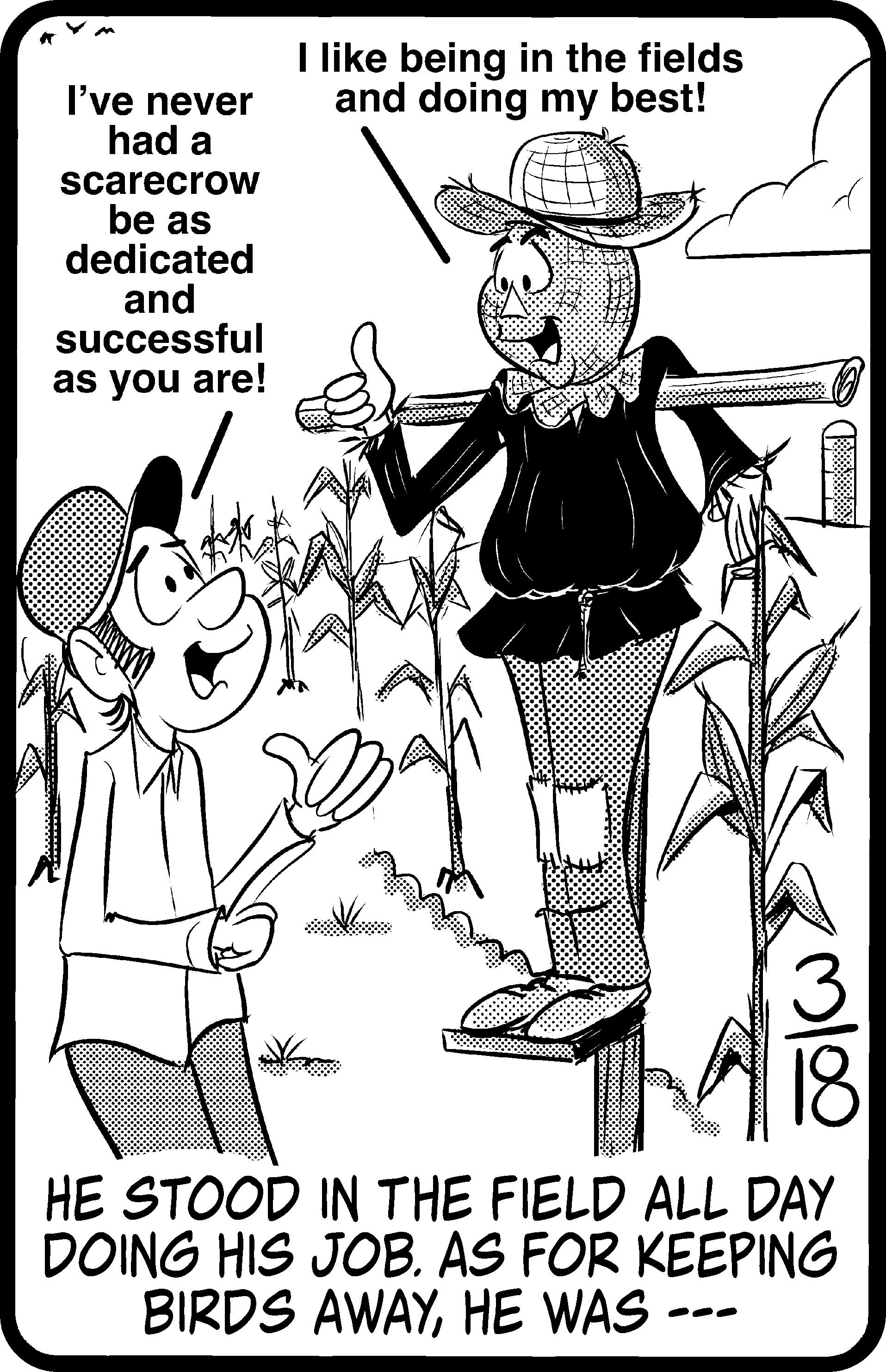
HE STOOD IN THE FIELD ALL DAY DOING HIS JOB. AS FOR KEEPING BIRDS AWAY, HE WAS —
Jumble Cartoon 03/18/2026
TAOUNGTNDIS
🎯 Guess the Final Answer!
01
🌟 What's Special Today
Topical hooks and real-world connections
Topical AuthoritySemantic Entities
🌾
Scarecrow Season Starts
Spring planting begins across farms. Scarecrows go up in fields to protect new crops from hungry birds looking for seeds.
🎪
Puzzle Theme Connection
Today's cartoon perfectly matches spring farming season. The scarecrow joke ties the puzzle theme directly to real world seasonal events happening now.
📅
This Day In History
March 18 marks the beginning of spring preparation. Farmers historically planted crops around this date, making scarecrows essential field guardians.
🧩
Pattern Observation
Notice how all four solved words use common letters like A and T. The anagram puzzle builds from familiar letter combinations most solvers recognize quickly.
02
📚 Word Meanings
Dictionary-quality definitions for vocabulary building
E-E-A-T: ExpertiseFeatured Snippet

👆 Tap each card to reveal the meaning

TABOO
Adjective. Something forbidden or not allowed because of social rules or traditions. Breaking a taboo means doing something your culture says you shouldn't do.
▼ Tap to reveal
SWUNG
Verb. Past tense of swing. Means to move back and forth in a smooth motion, like on a playground swing or swinging a baseball bat.
▼ Tap to reveal
ATTEND
Verb. To go to or be present at something. You attend school, attend a party, or attend a movie. It means you show up and participate.
▼ Tap to reveal
FINISH
Verb. To complete something or reach the end. When you finish your homework, you're done with it. The finish line is where a race ends.
▼ Tap to reveal
03
🧠 How Words Solved
Expert solving methodology step by step
E-E-A-T: Experience

👆 Tap each word to see the solving trick

ABOTOTABOO
Look at ABOTO and spot the two O's immediately. Rearrange the remaining letters A, B, T around them. Try TABOO first, it's a common word most people know.
GWNUSSWUNG
Start GWNUS by identifying the W, which is uncommon. Build around it: W, then add the other letters. SWUNG jumps out once you see the G and N together.
TEDANTATTEND
Notice TEDANT has a double T. Pull those apart and work with common endings like -END. ATTEND uses both T's separated, which is the key insight here.
SNFIHIFINISH
Tackle SNFIHI by spotting the double I. Rearrange S, N, F, H around them. The -ISH ending is super common, leading you straight to FINISH.
04
🏗 Final Answer Built
How circled letters combine to form the solution
TABOO
T
A
B
O
O
SWUNG
S
W
U
N
G
ATTEND
A
T
T
E
N
D
FINISH
F
I
N
I
S
H
Colored letters combined →
OUTSTANDING
05
🎨 Cartoon Explained
Deep analysis of wordplay and pun structure
E-E-A-T: Expertise

Picture a scarecrow standing alone in a big farm field. He's been there since sunrise, arms stretched out wide, staring at the sky all day long. Birds circle overhead, but they keep their distance from this silent guardian.

The humor comes from a clever pun. An scarecrow who's "outstanding" means two things at once. First, he's literally outstanding, standing out in the open field doing his job perfectly. Second, being outstanding means being really excellent or amazing. So the scarecrow is both literally out standing and doing an excellent job keeping birds away.

This joke lands because it uses a familiar phrase in a brand new way. We hear "outstanding" all the time as praise, but here it's describing someone literally standing outside. It's a 8/10 for cleverness because the visual picture makes the wordplay click instantly.

06
🌎 Word Origins
Etymology and linguistic history of each solved word
Deep Authority
TABOO
Polynesian
Taboo comes from the Polynesian word 'tabu.' Pacific Island cultures used this word to describe things that were forbidden or sacred. European sailors learned it and brought it back to English, where it became our modern word.
SWUNG
Old English
Swung comes from the Old English word 'swingan,' which meant to move or beat. Over centuries, it softened into the smooth motion we know today. Think of it like the natural movement of a rope or bat going back and forth.
ATTEND
Latin
Attend comes from Latin 'attendere,' meaning 'to stretch toward' or 'to listen to.' The 'ad' means toward and 'tendere' means to stretch. So attending something literally means stretching your attention toward it.
FINISH
Old French
Finish comes from Old French 'finir,' which meant to end or complete. It traces back to Latin 'finire.' The idea stayed the same for hundreds of years, making finish one of those stable words that means exactly what it did centuries ago.
07
📊 Difficulty Rating
Expert assessment with detailed analysis
E-E-A-T: Authority
⭐⭐⭐ Medium

The four words aren't super difficult on their own. TABOO and FINISH are common everyday words. But SWUNG and ATTEND require a bit more thinking since they're less frequently used than simple words.

The bonus round pushes this to medium level. Rearranging nine letters into a phrase takes real focus. You need all four solved words working correctly to build the final answer successfully, which adds pressure.

4
Words
22
Letters
~2m
Avg Time
08
💡 Pro Tips
Actionable solving strategies for today's puzzle
🔤
Spot Rare Letters
Look for uncommon letters like W, J, Q, or K first. In GWNUS, the W is rare and immediately suggests SWUNG. Rare letters narrow down possibilities fast.
🎯
Use Common Endings
English words often end in -ED, -ING, -ISH, or -END. FINISH uses -ISH and ATTEND uses -END. Spotting these patterns solves puzzles way faster than random guessing.
✏️
Write It Out Loud
Say each scrambled word out loud while rearranging letters. Your brain hears patterns that your eyes might miss. Sometimes speaking it makes the answer suddenly obvious.
🧠
Cross Check Your Work
After solving all four words, use their letters to build the bonus answer. If letters don't fit, go back and recheck each word. This catches mistakes early.
09
❓ Frequently Asked Questions
Common queries answered with expert insight
FAQ Schema
What are the Jumble answers for March 18, 2026?

Today's four solved words are TABOO, SWUNG, ATTEND, and FINISH. These are the answers to the scrambled words ABOTO, GWNUS, TEDANT, and SNFIHI. This daily word puzzle was created by the legendary team of David L. Hoyt and Jeff Knurek, who craft the Jumble puzzle appearing in newspapers nationwide.

Once you've solved these four words, you'll use their letters to unscramble the bonus round. The cartoon clue about the scarecrow in the field points you toward the final answer, which ties everything together with a clever pun about doing an excellent job.

 
How does the bonus round and final answer work?

After solving the four main words, you'll have leftover letters marked with a circle or highlight. These bonus letters rearrange into a final answer that solves the cartoon clue. Today's clue asks about a scarecrow keeping birds away from his field.

The beauty of the bonus round is that it uses letters you've already worked with. Getting the four words right makes the final answer much easier. Pay attention to which letters the puzzle marks as bonus letters, then arrange them like you're solving a smaller anagram puzzle.

 
What's the best way to solve scrambled words like ABOTO, GWNUS, TEDANT, SNFIHI?

Start by identifying unusual or uncommon letters in each scramble. GWNUS has a W that immediately suggests SWUNG. SNFIHI has double I's that point toward -ISH words. These landmarks help you narrow possibilities fast instead of trying random letter combinations.

Next, look for common word patterns and endings. Both ATTEND and FINISH use common English letter patterns. Once you spot one solved word, your brain gets momentum for the others. Work through them in the order that feels easiest first, then tackle the harder ones when your mind is warmed up.

 
What's the history behind these words and their origins?

These four words come from different languages showing how English borrowed from many cultures. TABOO traveled from Polynesian cultures to English through sailors. SWUNG and ATTEND both trace back to Old English and Latin roots connected to movement and attention. FINISH came from French, which itself came from Latin.

Understanding where words come from helps you remember them better. ATTEND literally meant 'to stretch toward' in Latin, which matches how you stretch your focus toward something you're attending. These historical connections make vocabulary stick in your memory longer.


Similar Posts

Leave a Reply

Your email address will not be published. Required fields are marked *