Jumble Answers for 03/12/2026
TODAY JUMBLE ANSWER

👆 Tap each card to reveal the meaning
👆 Tap each word to see the solving trick
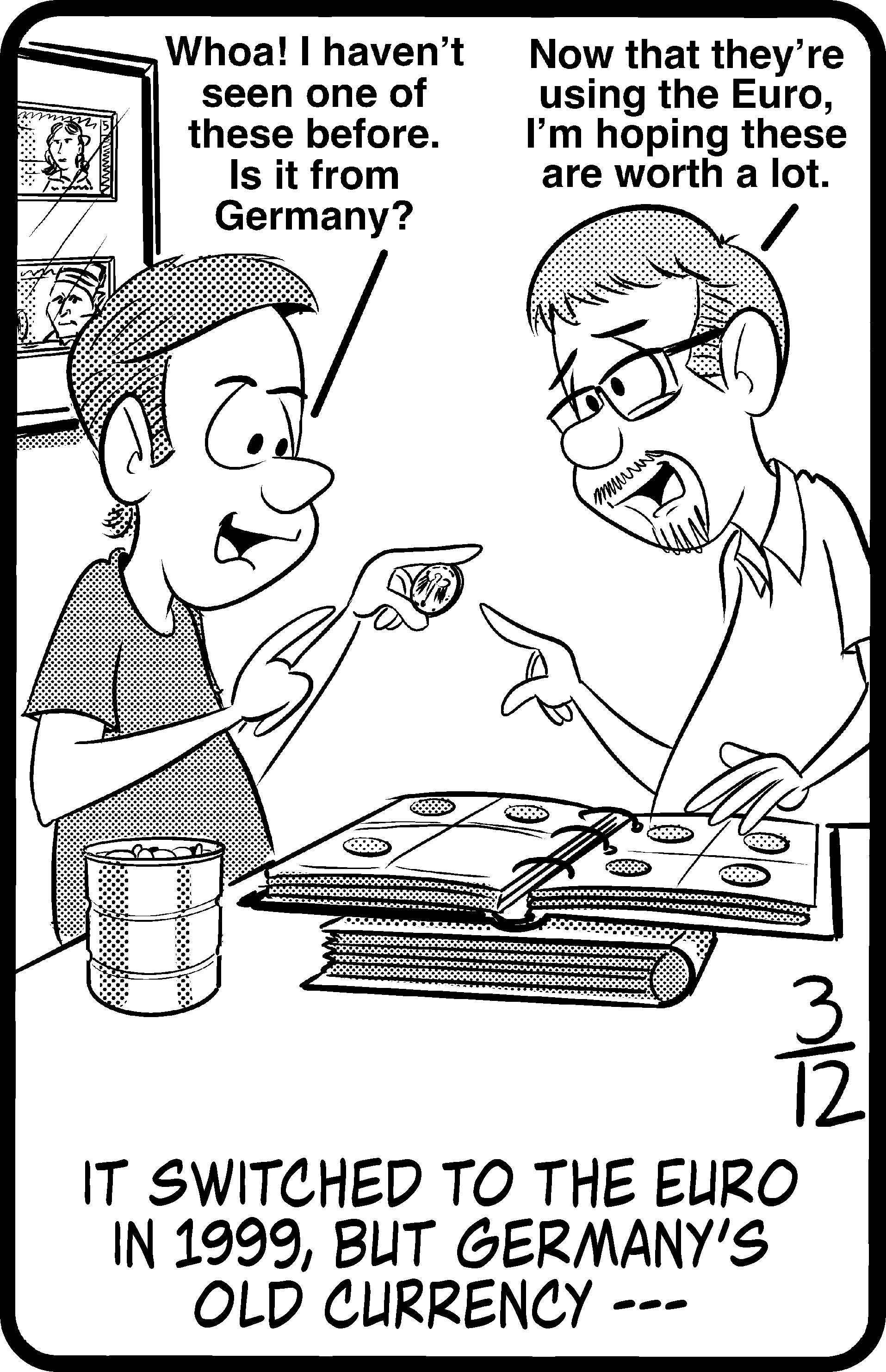
The cartoon shows a Deutsche Mark coin or bill looking sad and fading away, with a thought bubble saying the final answer. Germany's old currency really did disappear when the Euro took over in 2002, so it literally "left its mark" on history before vanishing.
The humor comes from the double meaning of "mark." A mark can mean a sign or impression something leaves behind, like a stain. But Deutschland's currency was called the Deutsche Mark, so the Mark actually left a mark. It's a clever play on words that only works because of the coin's actual name.
This joke lands because it combines history with wordplay in a sneaky way. You have to know Germany used the Mark as money to get it. The puzzle makers pulled off something tricky here. 8/10 for cleverness because it teaches you history while making you smile.
FRISK and AFTER are everyday words most readers recognize quickly. However, PACKET and SALMON have more scattered letters that don't naturally cluster together, making them trickier to spot.
The cartoon clue about Germany's Euro switch requires general knowledge. It's not super hard if you know recent history, but younger solvers might need hints about Germany's currency change in 2002.
The four solved words for today's puzzle are FRISK, AFTER, PACKET, and SALMON. Created by puzzle masters David L. Hoyt and Jeff Knurek, these words unscramble from IFSRK, ETRAF, KATEPC, and ALONSM.
Each word connects to the cartoon clue about Germany's old currency and the Euro. Once you solve all four words correctly, you'll use the circled letters to unscramble the bonus answer using the letters in RISFTKETALM.
After solving the four main words, certain letters are circled within them. You take those circled letters and rearrange them to form the final answer that completes the cartoon's joke or clue.
Today's bonus uses letters from all four solved words. The circled letters spell out a phrase that connects directly to the cartoon about Germany's currency history. This two-step solving process makes Jumble more satisfying than simple word puzzles.
Start by identifying consonant clusters and common letter patterns. IFSRK has F-R-I-S-K, which you might recognize as a quick action word. KATEPC has the P-A-C pattern that often appears in container or package words.
Move letters around in groups rather than individually. Say the combinations out loud. Your ear catches real words faster than your eyes sometimes do. Practice with common word endings like -ER, -ED, and -ING.
SALMON comes from Latin, showing how fish names traveled through European languages. FRISK comes from Old French, originally meaning lively movement, then shifted to mean quick searching because of that energetic connection.
Both words prove how English borrowed from neighboring languages over centuries. Understanding these roots helps you recognize similar words in future puzzles and improves your overall vocabulary for word games.