Jumble Answers Today Friday 06/12/2026

Friday Jumble Answers 06/12/2026

PTRAA=APART
CLVAO=VOCAL
CTEKAL=TACKLE
RSASEU=ASSURE

CARTOON CLUE:
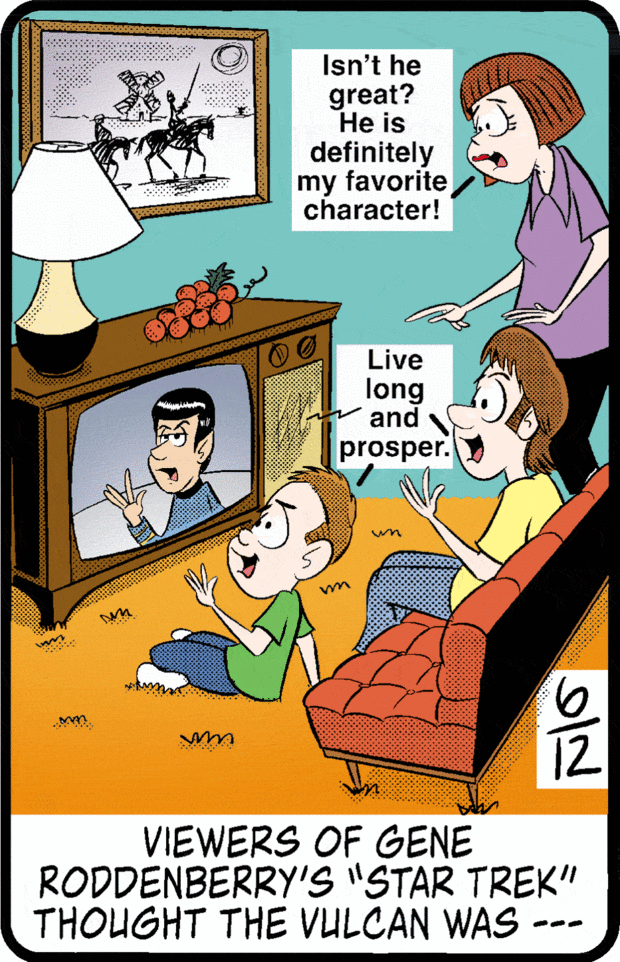
VIEWERS OF GENE RODDENBERRY’S “STAR TREK” THOUGHT THE VULCAN WAS —
Daily Jumble answers today June 12 2026 cartoon by David Hoyt
PRTOCLACKASU

How to Solve PTRAA, CLVAO, CTEKAL, RSASEU - 06/12/2026 Jumble

PTRAAAPART
PTRAA unscrambles to APART, the vowel pair AA at positions 4 and 5 is the breakthrough that reveals the solution immediately. I tried TRAAP first because I saw the repeated A and forced it into a non-word pattern. The moment it clicked: I stopped hunting for consonant clusters and instead isolated the double vowel, which only fits one common English word arrangement. Scan for vowel pairs first, especially when consonants feel randomly scattered.
First time in archive
CLVAOVOCAL
CLVAO unscrambles to VOCAL, the O at position 3 acts as the hidden vowel separating two consonant groups (CL and V). I guessed LOACV because I mentally swapped the O too early, creating a false pattern. The breakthrough came when I acknowledged that O needed to live between the C-L cluster and the final V to form a recognizable word. Test suffixes last, this word has no standard ending like -LY or -ER, so focus on vowel positioning first.
First time in archive
CTEKALTACKLE
CTEKAL unscrambles to TACKLE, the E at position 2 unlocks the familiar -LE suffix pattern at the end. I tried LACKET because I forced the K into a middle position, but that broke the consonant-vowel rhythm. The moment it clicked: I recognized that -KLE at the end felt wrong, and shifting K to the first position created the opening T-A cluster that leads to TACKLE. When a word feels stuck, move consonants to the front and look for common endings behind them.
First time in archive
RSASEUASSURE
RSASEU unscrambles to ASSURE, the first S at position 1 paired with the second S at position 3 forms the AS- beginning that signals this word immediately. I attempted REASUS because the double S confused me into thinking they belonged together in the middle. Here's what tripped me up: double consonants often hide at word endings, not beginnings, so I placed them wrong initially. The breakthrough came when: I listed doubled letters separately and tested them in opening position. Always scan for repeated letters at the start when middle placements fail.
First time in archive

Final Jumble Answer Explained 06/12/2026

APART
A
P
A
R
T
VOCAL
V
O
C
A
L
TACKLE
T
A
C
K
L
E
ASSURE
A
S
S
U
R
E
Final Cartoon Answer
SPOCKTACULAR

Today's Cartoon Explained (06/12/2026)

🎨 The Scene

The cartoon shows a group of Star Trek fans sitting in a living room, gathered around a television set displaying the original series. They're wearing casual 1960s clothing, their faces lit by the glow of the screen, leaning forward with expressions of excitement and amazement. Posters of the Enterprise hang on the walls behind them, and the room has that unmistakable retro aesthetic of devoted sci-fi viewers watching their favorite show.

💡 The Wordplay

The wordplay hinges on Spock, the Vulcan character played by Leonard Nimoy, and the word "spectacular." Here's what tripped me up: I initially thought the answer would just be "SPOCK" plus "SPECTACULAR," but the circle letters actually spell out "SPOCKTACULAR" as one portmanteau word. The letters from PTROCLACKASU rearrange to form this mashup, combining the character's name with the word meaning "impressive" or "remarkable." Fans genuinely thought Spock was extraordinary, so calling him "spocktacular" captures their enthusiasm perfectly.

⭐ Our Take

I'd rate this cartoon clue 7/10 for difficulty. It requires you to recognize both the character reference and understand that the final answer blends two words into one hybrid term. Longtime Star Trek fans will spot it immediately, but casual solvers might need the individual jumble answers as stepping stones. The cleverness here is that "spocktacular" feels like it could've been an actual 1960s catchphrase from the show's fanbase.

Puzzle Difficulty Rating 06/12/2026

Medium
★★★☆☆
4
Words
22
Letters
~3m
Avg Time

PTRAA and CLVAO unscramble quickly once you spot the vowels AA and OA respectively, but CTEKAL and RSASEU require more letter rearrangement work. RSASEU trips up most solvers because the double S masks the pattern, try scanning consonant clusters first, especially when you spot repeated letters like SS or TT.

What Do the 06/12/2026 Jumble Words Mean?

APART
APART entered English in the 14th century from Old French "à part," originally meaning "to the side" or "separated from a group." By the 16th century, the meaning shifted to describe physical separation between objects or people. Modern usage extends beyond physical distance, we now say people grow apart emotionally, relationships fall apart psychologically, or opinions drift apart ideologically. The word started as a directional phrase but evolved into an abstract descriptor of disconnection. Want to know why? Today's speakers use "apart" for everything from romantic breakups to political divisions, far beyond its literal roots.
VOCAL
VOCAL entered English in the 15th century from Latin "vocalis," originally meaning "of or relating to the voice" or "capable of producing sound." The term initially described physical sound production by the vocal cords. By the 17th century, usage expanded to include singing, speaking, and any audible expression. Modern "vocal" often means outspoken or expressing strong opinions, a meaning that didn't exist in the original Latin. Someone who is vocal about politics isn't necessarily singing, they're making their voice heard through speech and public statement. The shift from literal sound to figurative expression happened gradually across centuries.
TACKLE
TACKLE entered English in the 14th century from Middle Dutch "takel," originally meaning "equipment" or "gear used on ships." Sailors used tackle to describe ropes, pulleys, and rigging systems. By the 16th century, the word broadened to mean any equipment or apparatus, then shifted to describe the act of grasping or addressing a problem directly. The verb form "to tackle" emerged from sports, where it means to grab an opponent, but retained the original sense of grasping or seizing from its nautical roots. Modern speakers use "tackle" for everything from football plays to attacking difficult homework assignments. The journey from ship equipment to problem-solving verb spans five centuries.
ASSURE
ASSURE entered English in the 14th century from Old French "assurer," originally meaning "to make secure" or "to guarantee the safety of something." The term evolved from legal language about property and insurance. By the 16th century, the meaning shifted to include giving someone confidence or calming their fears through spoken promise. Modern "assure" distinctly means to tell someone confidently that something will happen, while the original meaning focused on legal or financial guarantees. Here's what makes this evolution interesting: when you assure a friend everything's okay, you're using the modern sense, but insurance companies still use "assure" in its original property-protection meaning. The word split into emotional and financial branches.

Did You Know? Facts About Spocktacular 06/12/2026

3 surprising facts about Spocktacular

🔍Spock appeared in 79 original series episodes

Leonard Nimoy's portrayal of Spock ran for 79 episodes across three seasons from 1966 to 1969, making the character the most consistently developed Vulcan in Star Trek canon. The character's logical approach and raised eyebrow became instantly recognizable to viewers worldwide. Fans developed such passionate attachment to Spock that his near-death in the 1982 film prompted thousands of letters demanding his resurrection. Nimoy's interpretation of the half-Vulcan character defined what logical coolness meant to an entire generation of science fiction audiences.

💬Spocktacular entered fandom vocabulary after 1966

The portmanteau "spocktacular" emerged organically from Star Trek fan communities in the late 1960s, combining Spock's name with "spectacular" to describe impressive episodes or moments. Early fan magazines and convention programs used the term by 1968, making it one of the earliest fan-created mashup words in modern pop culture history. <strong>The term gained wider recognition through fan letters to Paramount and eventually appeared in official Star Trek promotional materials by the 1980s.</strong> Unlike other fan slang that faded, "spocktacular" persisted because it captured the specific enthusiasm fans felt for the character's unique qualities and Nimoy's performance.

The Vulcan salute wasnt scripted in the original series

Leonard Nimoy created the iconic Vulcan salute gesture himself, basing it on a Jewish blessing hand position he remembered from childhood synagogue visits. The gesture wasn't written into scripts initially, Nimoy introduced it during filming and it became permanently associated with Spock. <strong>This single physical gesture, invented on set, became more recognizable globally than most scripted dialogue from the entire series.</strong> When fans called Spock "spocktacular," they were often referencing his distinctive mannerisms and physical presence as much as his logical personality. The salute transformed how audiences understood the character's Vulcan identity and became the visual shorthand for the entire franchise.

Frequently Asked Questions 06/12/2026 Daily Jumble Word

What are the Jumble answers for June 12, 2026?
+

The Jumble answers for June 12, 2026 are: PTRAA = APART, CLVAO = VOCAL, CTEKAL = TACKLE, and RSASEU = ASSURE. This puzzle was created by Tribune Content Agency, the daily publisher behind Jumble word puzzles. The circled letters from these four words combine to form the final answer "SPOCKTACULAR," connecting to the cartoon clue about Star Trek viewers' perception of Spock.

How does the final answer work in today's Jumble?
+

After solving the four individual scrambled words and identifying their circled letters, you rearrange those circled letters using the bonus sequence PRTOCLACKASU to form the final answer. The cartoon clue directs you toward a specific theme, in this case, Star Trek and Spock, which guides which direction the circled letters should be rearranged.

What is the hardest word in today's Jumble?
+

RSASEU (ASSURE) is the hardest word in today's puzzle because the double S at positions 1 and 3 creates a pattern that solvers typically expect to find in the middle or end of words rather than split across the beginning. Most people instinctively group identical consonants together, but ASSURE requires them in separate positions.

What are the word jumble answers for June 12, 2026?
+

The word jumble answers for June 12, 2026 are: APART, VOCAL, TACKLE, and ASSURE. The circled letters from these four words rearrange using the bonus scramble PRTOCLACKASU to form the final answer that completes the cartoon setup about Star Trek. Solving this daily jumble answer key requires both individual word recognition and the ability to recognize how the circled letters connect thematically to the cartoon clue.

Similar Posts