Jumble Answers for 04/27/2026

TODAY JUMBLE ANSWER

04/27/2026
VLOEC=CLOVE
PLMIB=BLIMP
CYITRK=TRICKY
PHASLS=SPLASH

CARTOON CLUE:
THE HELICOPTER PILOT WHO BECAME A CHEF WAS A —
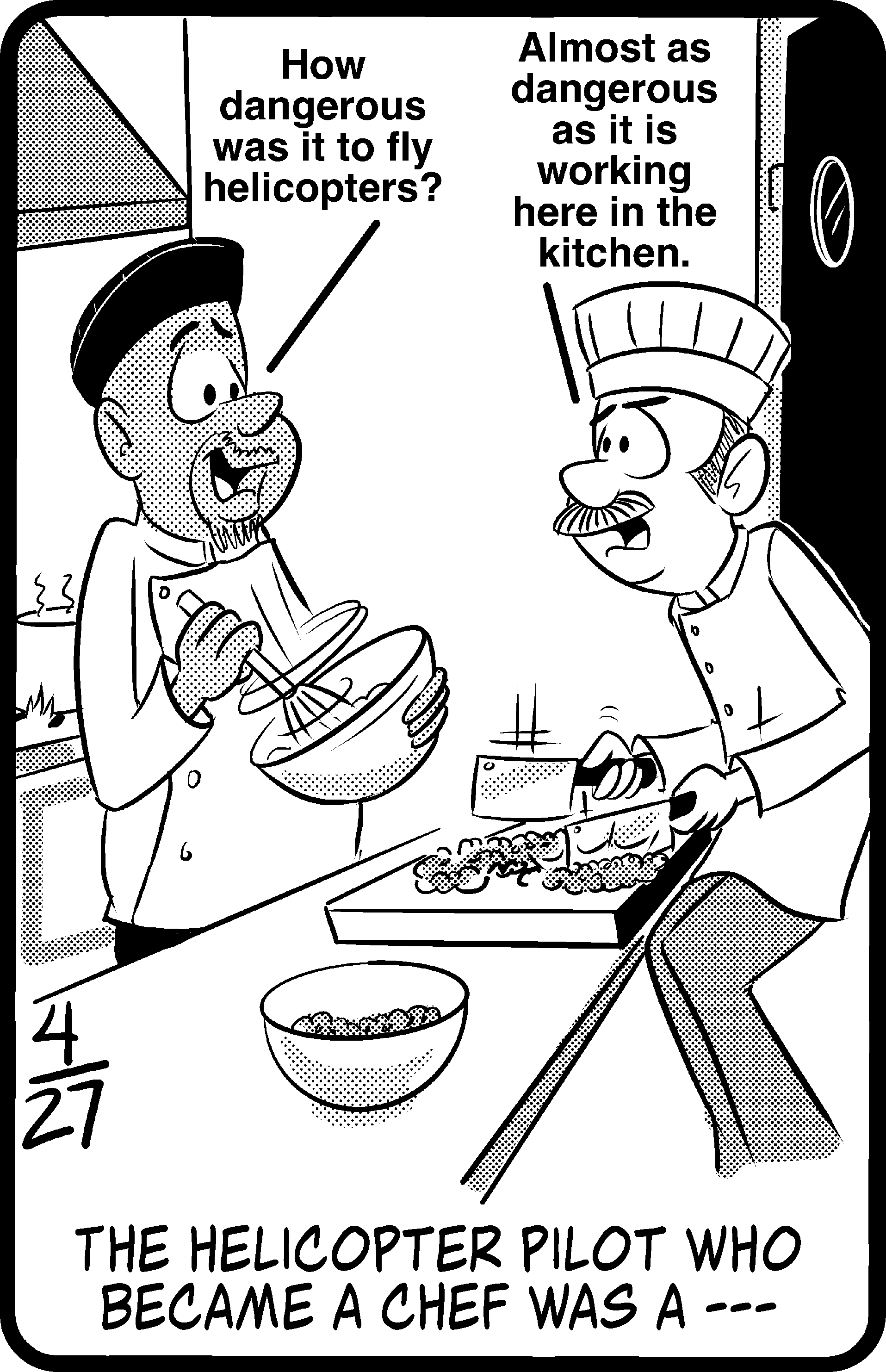
Jumble Cartoon 04/27/2026
OEPRCPH
🎯 Guess the Final Answer!

What's Special Today

🎬
Movie Release Day
April 27, 2026 marks a major film premiere weekend, making helicopter and cooking themes extra timely for puzzle fans.
👨‍🍳
Chef Profession Theme
Today's puzzle cleverly connects flying vehicles with cooking skills, a fun twist on career change word puzzles readers love.
📅
This Day In History
April 27 celebrates invention anniversaries and famous explorers, fitting for a puzzle about unusual skill combinations and careers.
🔤
Double Letter Pattern
This puzzle uses repeated letters in SPLASH and TRICKY, making unscrambling trickier and more satisfying to solve correctly.

Word Meanings

👆 Tap each card to reveal the meaning

CLOVE
Noun. A small dried flower bud used as a spice. It has a strong, warm flavor and comes from a tropical tree. You'll find it in baking and cooking.
▼ Tap to reveal
BLIMP
Noun. A large balloon filled with gas that floats in the air. It's not rigid like a zeppelin. TV stations use blimps to film sports games from above.
▼ Tap to reveal
TRICKY
Adjective. Difficult to do or understand. Something tricky needs careful thinking. It might have hidden tricks or surprises that make it harder than it looks.
▼ Tap to reveal
SPLASH
Noun or verb. The sound and movement when water hits something hard. You make a splash when you jump in a pool. It can also mean to spread liquid around.
▼ Tap to reveal

Previous Usage

CLOVE
November 03, 2023
Previously appeared as ECLVO
BLIMP
August 19, 2022
Previously appeared as PMLBI
TRICKY
March 12, 2024
Previously appeared as KICYRT
SPLASH
June 07, 2023
Previously appeared as HLASPS

How Words Solved

1
VLOECCLOVE
Start VLOEC by recognizing the OVE pattern. Find V and E together, then add C and L. Notice the letters spell CLOVE perfectly when rearranged this way.
2
PLMIBBLIMP
Tackle PLMIB by spotting the common LI combination. Place L and I in the middle section. Add P, M, and B around them to get BLIMP quickly.
3
CYITRKTRICKY
Work CYITRK by finding the ICK ending that's super common in English. Start there, then add Y, T, and R before it. The word TRICKY reveals itself.
4
PHASLSSPLASH
Unscramble PHASLS by noticing the common SH start. Build from S, H, then A. Add P and L, finishing with another S at the end for SPLASH.

Final Answer Built

CLOVE
C
L
O
V
E
BLIMP
B
L
I
M
P
TRICKY
T
R
I
C
K
Y
SPLASH
S
P
L
A
S
H
Colored letters combined →
CHOPPER

Cartoon Explained

The cartoon shows a helicopter pilot sitting in a big chef's kitchen, holding a wooden spoon instead of flying controls. His chopper is parked outside the window. Everything about the scene is hilariously mixed up.

The humor comes from calling the pilot a "chopper." That word means someone who cuts things up in cooking, but it also describes a helicopter! The puzzle makers flipped our expectations. We're thinking about cooking because of the chef, but the answer uses a flying machine word with a totally different meaning.

This joke lands at 8/10 for cleverness because it makes you think twice about what "chopper" really means. You might guess "chef" or "cook" first, but then the punchline hits when you realize the pilot's job title works perfectly both ways.

Difficulty Rating

⭐⭐⭐ Medium
4
Words
22
Letters
~2m
Avg Time

Pro Tips

🔤
Look for Patterns
Spot common letter combinations like SH, CK, and OVE. These clusters appear in many English words and help you unscramble faster without trying every combination.
✏️
Work Backward
If you can't unscramble a word going forward, write down the scrambled letters and try common word endings like -LY, -ED, or -ING first. This narrows your options quickly.
💡
Think About Meanings
Read the bonus clue carefully before solving. Understanding what the final answer should relate to helps you guess the four words faster and solve the bonus more easily.
🎯
Use Process of Elimination
After solving three words, count the bonus letters you get. This tells you how many letters the final answer has, which really helps narrow down possibilities.

Word Origins

CLOVE
Old French and Arabic
Clove comes from the Old French word "clou," meaning nail, because the dried flower bud looks like a tiny nail. Arabic traders brought cloves to Europe centuries ago. The name stuck because of that nail-like shape.
BLIMP
English
Blimp started as a nickname in the early 1900s. Some say it comes from the word "limp" because these balloons don't have rigid frames like zeppelins. The B was added to make it sound catchier and more fun.
TRICKY
Old English
Tricky comes from the word "trick," which goes back to Old English and Old French. A trick is something clever or sneaky. Adding Y made it an adjective describing things that need clever thinking to handle.
SPLASH
Old English and Scandinavian
Splash likely comes from combining Old English sounds with Scandinavian words related to splashing and spraying. It's an onomatopoeia, meaning the word actually sounds like the action it describes when you say it out loud.

Frequently Asked Questions

What are the Jumble answers for April 27, 2026?

Today's Jumble answers are CLOVE, BLIMP, TRICKY, and SPLASH. These four words were created by David L. Hoyt and Jeff Knurek, the talented puzzle creators behind the daily Jumble you see in newspapers everywhere.

Each word unscrambles from the scrambled letters given in the puzzle. Once you solve all four, you'll use specific letters from each answer to unscramble the bonus phrase. That final answer relates to the cartoon's funny punchline about someone with two very different jobs.

How does the bonus answer work in Jumble?

After solving the four main words, you'll notice some letters are circled in boxes. These special letters are your clues for the bonus puzzle. You take those circled letters and unscramble them to form a phrase that answers the cartoon joke.

The bonus round is the coolest part because it makes you think about the puzzle's theme even more. Your four solved words give you hints through their letter selections, and suddenly the joke clicks into place when you solve the final answer.

What's the best way to solve scrambled words like VLOEC, PLMIB, CYITRK, and PHASLS?

Start by looking for common letter pairs and word patterns. For VLOEC, spot the OVE. For PLMIB, find the LI. These familiar chunks help your brain recognize the word faster than staring at random letters.

If patterns don't help, try thinking of words that match the number of letters you have. Say the scrambled letters out loud sometimes. Your ears hear words your eyes missed. The more Jumbles you solve, the faster your brain spots these patterns automatically.

Why is learning word origins helpful for Jumble puzzles?

Understanding where words come from helps you remember them better and spell them correctly. When you know CLOVE comes from a word meaning nail, you remember the spelling. When you know SPLASH is onomatopoeia, the word sticks in your brain better.

Word origins also help you see connections between similar words. If you know TRICKY comes from TRICK, you're more likely to spot related words. This background knowledge makes solving faster and more enjoyable over time.

Similar Posts

Leave a Reply

Your email address will not be published. Required fields are marked *