Jumble Answers for 03/14/2026
TODAY JUMBLE ANSWER

👆 Tap each card to reveal the meaning
👆 Tap each word to see the solving trick
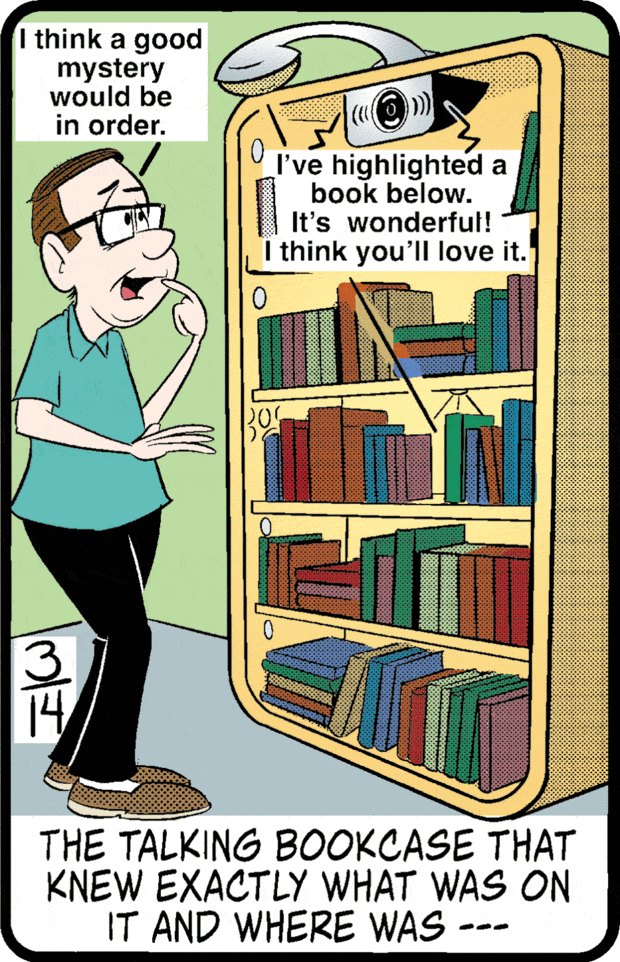
Picture a fancy library with a tall wooden bookcase that can talk. It's standing there proud, announcing that it knows exactly where every single book sits on its shelves. Not a single book is out of place.
The humor comes from a pun about the word "shelf." When something is "aware," it means it knows and understands things. A "shelf aware" bookcase is both conscious of its own existence and perfectly organized. It's a clever play on words that makes you smile when you get it.
This joke lands really well because we don't usually think of furniture as being intelligent or aware. Imagining a bossy bookcase that's proud of how organized it is creates a funny picture in your head. The pun is smooth and satisfying. 8/10 for cleverness.
These four words are pretty standard for Jumble solvers. FLUSH and AHEAD are super common, and most people know LAWYER. BEHALF is the trickiest word here, but it's still familiar to most fifth graders.
The real challenge is the final answer. You need to unscramble LSEAEHFAWR into a two-word phrase that fits the bookcase clue. That last step requires thinking creatively about what the cartoon is trying to show you.
Today's four solved words are FLUSH, AHEAD, BEHALF, and LAWYER. This puzzle was created by David L. Hoyt and Jeff Knurek, the talented team behind the daily Jumble puzzle that appears in newspapers everywhere.
Each of these words unscrambles from the daily scrambled clues at the top of the puzzle. Once you solve all four, you'll use the circled letters to unlock the final answer that goes with the funny bookcase cartoon.
After you solve the four main words, certain letters in those words are circled. You'll take those circled letters and rearrange them to create a two-word phrase that answers the cartoon clue.
This final step is like a second puzzle hiding inside the first puzzle. It's much harder than the regular words, but it's also the most satisfying part when you crack the code and understand the joke.
Start by looking at SUFHL, DHAAE, HABFLE, and ARYWEL and spotting common letter patterns. Words that end in -ER, -SH, or have double letters are easier to see. Say the letters out loud, which helps your brain recognize real words.
Don't be afraid to write down different combinations on paper. Sometimes seeing the letters physically arranged helps you find the answer faster than just thinking about it.
FLUSH and LAWYER both trace back to Old French origins related to flowing water and legal work. AHEAD comes from Old English, simply meaning "toward the front." BEHALF also comes from Old English, meaning "the side of someone."
These words have traveled through history and landed in modern English because they describe common ideas we still use every day. Knowing their stories makes them easier to remember.