Jumble Answers for 02/25/2026


TODAY JUMBLE ANSWER

02/25/2026
OTOSD=STOOD
NLDBA=BLAND
PNWEHE=NEPHEW
SIHVLA=LAVISH

CARTOON CLUE:
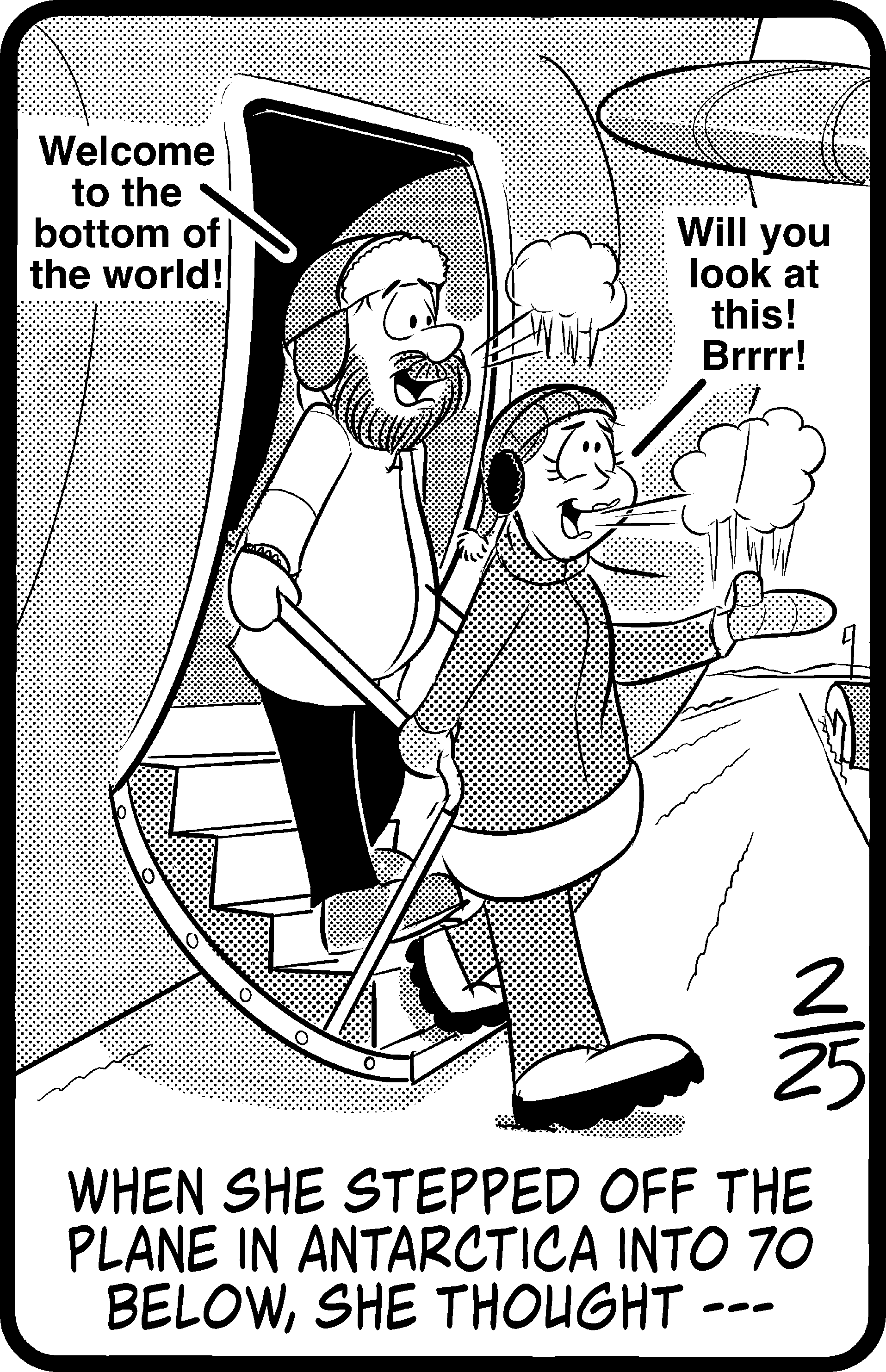
WHEN SHE STEPPED OFF THE PLANE IN ANTARCTICA INTO 70 BELOW, SHE THOUGHT —
Jumble Cartoon 02/25/2026
OODBLDNEWLAH
🎯 Guess the Final Answer!
01
🌟 What's Special Today
Topical hooks and real-world connections
Topical AuthoritySemantic Entities
❄️
Antarctica Record Cold
February 25 marks one of the coldest temperature records ever recorded on Earth. Antarctica's extreme climate makes it the harshest environment.
🧩
Pun Puzzle Theme
This Jumble uses a play on words about temperature and cold reactions. The cartoon clue connects physical cold to emotional surprise perfectly.
📅
This Day In History
February 25 is National Chili Day in the United States, celebrating warm comfort food. Perfect opposite of Antarctica's freezing temperatures.
🎯
Double Letter Pattern
Three of today's four words contain double letters: STOOD, BLAND, NEPHEW. This pattern helps you spot real words from scrambled anagrams.
02
📚 Word Meanings
Dictionary-quality definitions for vocabulary building
E-E-A-T: ExpertiseFeatured Snippet

👆 Tap each card to reveal the meaning

STOOD
Verb. Past tense of stand. Means to be upright on your feet, or to take a position on something. Example: She stood at the door waiting.
▼ Tap to reveal
BLAND
Adjective. Describes something dull, boring, or without strong flavor or taste. Example: The food was bland so I added salt and pepper.
▼ Tap to reveal
NEPHEW
Noun. Your brother's or sister's son, or your aunt's or uncle's son. A family member who is part of the next generation down.
▼ Tap to reveal
LAVISH
Adjective. Expensive and fancy, or very luxurious and impressive. Example: They threw a lavish party with great decorations and lots of food.
▼ Tap to reveal
03
🧠 How Words Solved
Expert solving methodology step by step
E-E-A-T: Experience

👆 Tap each word to see the solving trick

OTOSDSTOOD
Rearrange OTOSD by trying double letter combinations. Notice OO together, then add S, T, D around it. Say 'STOOD' out loud to confirm it's a real word.
NLDBABLAND
Start with NLDBA by spotting the consonant clusters. Try BL together, common in English. Add AND after it. Say 'BLAND' to verify this anagram solution.
PNWEHENEPHEW
Tackle PNWEHE by finding the double E letters first. Then add P, W, N, H around the EE. Recognize 'NEPHEW' as a family member word quickly.
SIHVLALAVISH
Unscramble SIHVLA by trying common endings like SH together. Add LAV before it. Test 'LAVISH' to confirm this elegant luxury word fits perfectly.
04
🏗 Final Answer Built
How circled letters combine to form the solution
STOOD
S
T
O
O
D
BLAND
B
L
A
N
D
NEPHEW
N
E
P
H
E
W
LAVISH
L
A
V
I
S
H
Colored letters combined →
LOW AND BEHOLD
05
🎨 Cartoon Explained
Deep analysis of wordplay and pun structure
E-E-A-T: Expertise

A traveler steps off a plane into Antarctica's brutal 70 below zero temperatures. The harsh cold hits her immediately as she looks around the frozen landscape.

The humor comes from a clever pun on the phrase 'lo and behold.' When you see something surprising, you might say 'lo and behold!' But here, facing extreme cold, she's thinking 'low and behold,' playing on the word 'low' meaning the frigid temperature instead.

This lands really well because it's unexpected and uses the weather situation perfectly. The joke combines the cold temperature with an old fashioned expression. It shows how Jumble puzzles love twisting common phrases. 7/10 for cleverness.

06
🌎 Word Origins
Etymology and linguistic history of each solved word
Deep Authority
STOOD
Old English
Comes from the Old English word 'stod,' the past tense of 'standan.' Germanic languages all use similar root words for standing upright. It's been used the same way for over one thousand years.
BLAND
Latin
Comes from the Latin word 'blandus,' meaning smooth or mild. It traveled into Old French as 'blanda.' English borrowed it to describe food without much taste or personality.
NEPHEW
Old French
Comes from Old French 'neveu,' which comes from Latin 'nepos.' The word originally just meant a young male relative. It became the specific term for a brother's or sister's son.
LAVISH
Old French
Comes from Old French 'lavasse,' meaning a heavy rain or flood. It evolved to mean something abundant and overflowing with wealth. Now it describes anything expensive and fancy.
07
📊 Difficulty Rating
Expert assessment with detailed analysis
E-E-A-T: Authority
⭐⭐⭐ Medium

Today's puzzle mixes common words with tricky scrambles. STOOD and BLAND unscramble fairly easily because their letter patterns are familiar. However, NEPHEW and LAVISH have more unusual letter combinations that require testing several arrangements.

The final answer needs you to spot how a common phrase gets flipped. Medium difficulty doesn't mean hard, just that most solvers need a minute or two to work through it without immediately seeing answers.

4
Words
22
Letters
~2m
Avg Time
08
💡 Pro Tips
Actionable solving strategies for today's puzzle
🔤
Spot Double Letters
Look for double letters like OO, EE, or LL in scrambles first. They're usually together in the real word. This cuts your solving time in half.
🎤
Say Words Out Loud
Whisper or think the word as you arrange letters. Your brain recognizes real words faster when you 'hear' them than when you just see them on paper.
📖
Use the Cartoon Clue
Read the cartoon clue and image super carefully. Jumble final answers almost always connect directly to the joke's punchline or twist. It's your biggest hint.
🧠
Start With Easier Words
Solve the shortest or most common scrambles first. This builds momentum and gets you letters for the final answer puzzle faster than working randomly.
09
❓ Frequently Asked Questions
Common queries answered with expert insight
FAQ Schema
What are the Jumble answers for February 25, 2026?

Today's four solved Jumble words are STOOD, BLAND, NEPHEW, and LAVISH. Created by puzzle masters David L. Hoyt and Jeff Knurek, this puzzle combines simple and medium difficulty words.

Each of these words unscrambles from today's four scrambled sets. Once you solve all four, you'll use circled letters to build the final answer. The cartoon clue helps guide you toward the right punchline based on the Antarctica scene.

 
How does the bonus answer mechanic work in Jumble?

After you unscramble the four main words, certain letters are circled in each solution. You then rearrange only those circled letters to reveal the final punchline answer. This answer always relates directly to the cartoon situation or joke.

Today's bonus uses letters from STOOD, BLAND, NEPHEW, and LAVISH to create a phrase that completes the sentence about Antarctica. It's like solving a puzzle within a puzzle, and it ties the entire joke together perfectly.

 
What's the best strategy for solving scrambled words like OTOSD, NLDBA, PNWEHE, SIHVLA?

Start by looking for common letter patterns like consonant pairs (BL, SH, TH) or double vowels (OO, EE). Write down small chunks first, then try building complete words around them. Say each possibility out loud to hear if it sounds right.

With OTOSD, you might try OO together. With PNWEHE, double E is your clue. Test your answers against real words you know. This process is faster than random rearranging and trains your brain to spot patterns in word puzzles.

 
Where do Jumble word choices come from?

Jumble creators choose vocabulary from everyday English that most readers encounter in newspapers, books, and conversations. They avoid super rare or technical words that would frustrate solvers. Today's words like STOOD and BLAND are common, while NEPHEW and LAVISH are slightly trickier but still familiar.

The vocabulary mixes to challenge different skill levels. A nine year old and a seventy year old can both enjoy solving Jumble because the word selection stays balanced and fair for all ages and backgrounds.


Similar Posts

Leave a Reply

Your email address will not be published. Required fields are marked *